
The trusted hardware layer for modern cryptography.
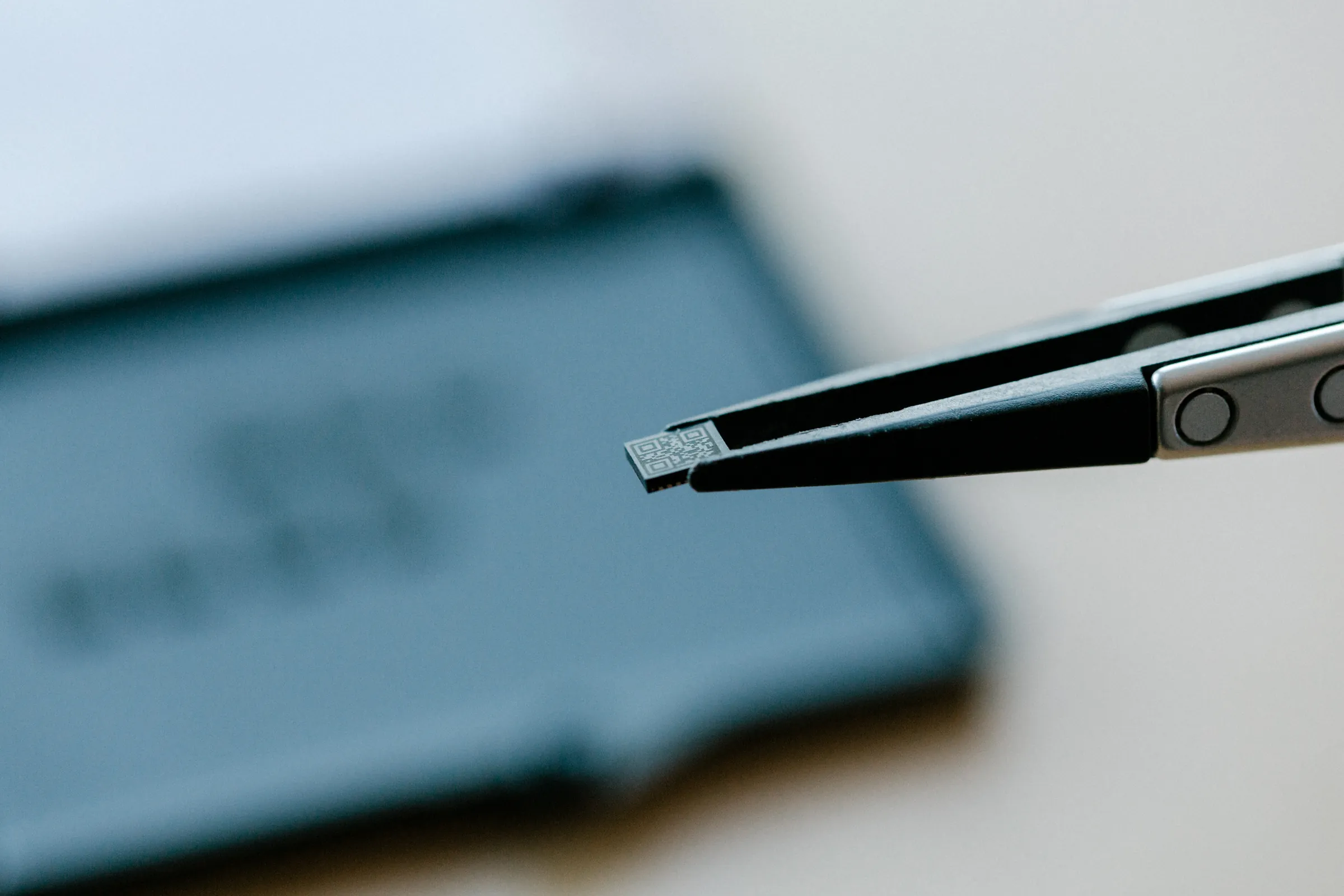
A fabless semiconductor and cybersecurity company in Barcelona. We design the photonic and electronic chips that let a cryptographic system generate its own entropy locally, and check that the source is still behaving while it runs.
A semiconductor company that sells assurance.
Quside provides the trusted hardware layer for modern cryptography, combining locally generated, observable quantum entropy with secure cryptographic execution in products designed for real-world integration and scale.
Quside is fabless. We design photonic and electronic chips, outsource fabrication, and run production of the finished cards ourselves. That combination is deliberate: owning the design is what makes the physical model behind the entropy source ours to document, and owning production is what makes a per-unit test record possible.
LOVE — Locally Verified Entropy — is three words for where the source sits and what it does. It sits locally, inside your device and your trust boundary; it is verified against a defined physical and statistical model while it runs; and what it delivers is entropy, the unpredictability every key, nonce, seed and token depends on.
We are not a quantum computing company, and we do not sell entropy as a service. Randomness that arrives over a network cannot be verified where it is used.
Research, then productisation, then platform.
Photonics research in the Barcelona area for six years before there was a company, then the longer stretch that turns a laboratory result into a part somebody can buy, qualify and ship.
Fabless, but not hands-off.
A fabless company can still be an industrial one. The design, the production of finished cards and the qualification evidence stay in-house; only wafer fabrication is outsourced, and photonic foundry supply runs through both US and European foundries for resilience.
We design the silicon
Photonic and electronic chips are designed in-house. The Ruby™ family is Quside architecture, which is what makes the physical model behind the entropy source ours to document and measure against.
We do not own a fab
Fabrication is outsourced. Photonic foundry supply runs through both US and European foundries, chosen for resilience rather than for unit price alone.
We ship finished cards
Production runs in-house and products leave as fully tested cards and modules, not as bare die a customer has to qualify alone.
We reuse the evidence
One assurance model runs across PCIe, FMC and embedded form factors, so qualification work done once carries into the next integration.
Barcelona.
The company sits alongside the photonics research ecosystem it came out of. Chip design, engineering, test and production are in the same place, which is what keeps the loop between a design change and a measured result short.
Around sixty people work here, a majority of them engineers. Photonic foundry supply runs through both US and European foundries, chosen for resilience — which also matters to customers in space, defence and government programmes with sovereignty requirements.
Go deeper.
For technical, commercial, procurement or legal diligence.
Leadership and advisors
The co-founders who still run the engineering, the scientific advisors alongside them, and the people who would answer your technical questions.
ReadWho we build with
Lattice, Coherent, PQShield, Keyfactor and Equinix — what each partnership does for a customer architecture.
ReadResearch and programmes
Where the work started in 2012, the patent position, and how research reaches the parts you can buy.
ReadWorking at Quside
The disciplines involved, what the problem is actually like, and how to reach the team in Barcelona.
ReadCompliance and certificates
Certificates and their scope, the documents a review asks for, and the notices that govern this site.
ReadReport a concern
The internal reporting system: who may use it, how confidentiality and protection from retaliation work, and the external authority.
ReadPatent portfolio
Ninety-plus patents behind the entropy engine, and how it is licensed into another company’s silicon.
ReadBring us the architecture you are trying to defend.
Whether that is a security appliance, a satellite payload, a PKI estate or a product family you are about to redesign, the useful conversation starts with where your keys come from today.