
Entropy that arrives inside the fabric.
For FPGA systems, secure communications equipment, defence and space programmes that need a local quantum entropy source on the mezzanine, with VHDL IP cores so it reaches the logic directly.
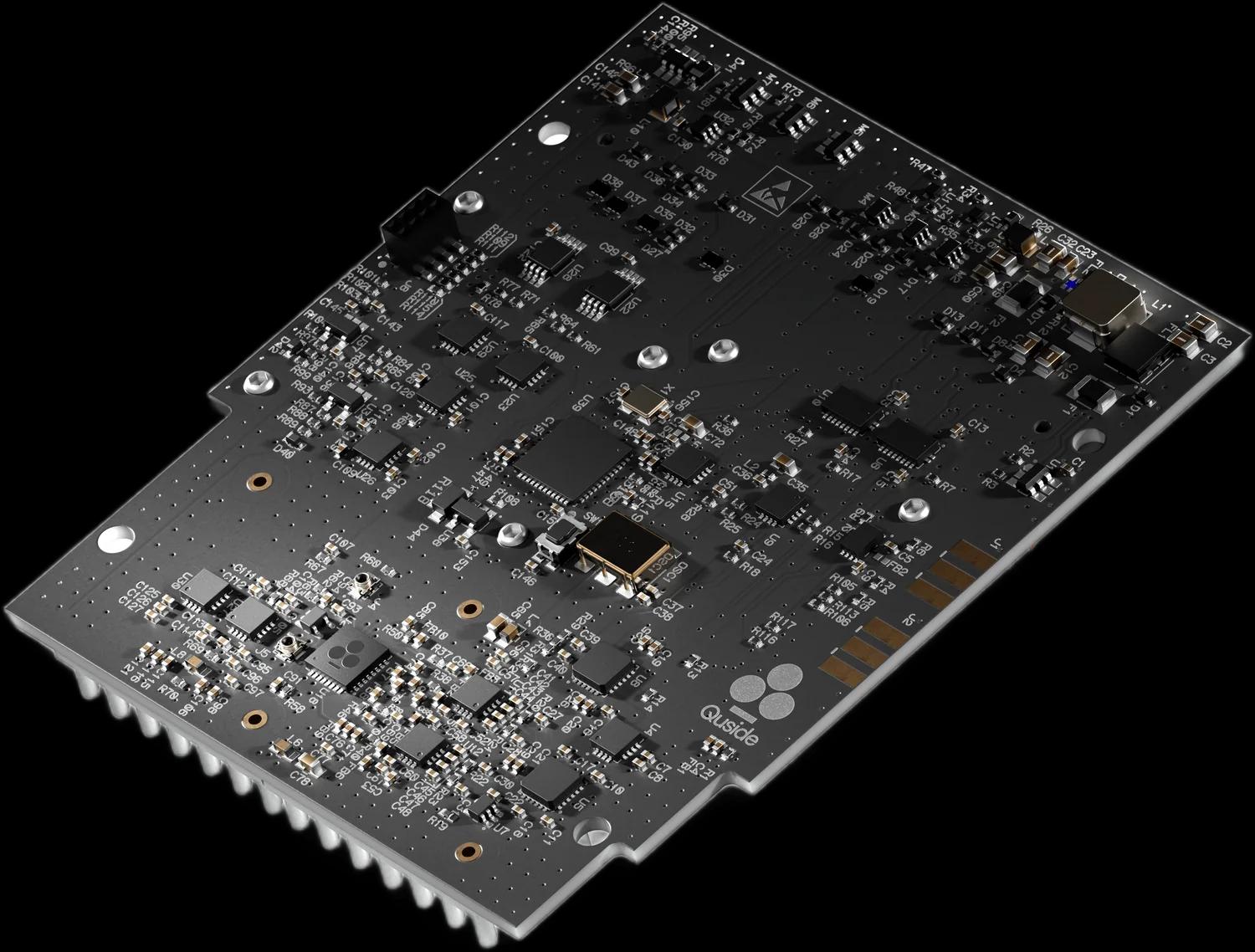
Shipping today, with VHDL IP cores for direct FPGA integration and evaluation units for design work on your own carrier.
NIST SP 800-90B, scoped to Quside PCIe One and FMC One. It validates the entropy source, not a complete random bit generator.
Qualification evidence for Ruby™ N1 supporting operation in GEO conditions. Programme-specific — confirm before citing in a bid.
When Nellite is the right module.
It fits when the cryptography runs in programmable logic, the form factor is already an FMC carrier, and the programme will ask for qualification evidence.
Architectures
- FPGA cryptographic pipelines where key material is generated inside the fabric, not on a host CPU.
- QKD and secure communications equipment that already carries an FMC carrier board.
- Satellite payloads and mission systems with long qualification cycles.
- Defence and government systems whose trust boundary cannot depend on a network.
Who usually specifies it
- FPGA and digital design engineers who will instantiate the IP core.
- Systems architects deciding where entropy enters a signal chain.
- Programme and bid managers assembling qualification evidence.
- Space and defence primes evaluating the supply chain behind the part.
Specifications.
Rows that depend on your carrier, enclosure or programme are settled in a design review.
| Interface | FMC LPC and HPC, and FMC+ |
|---|---|
| Form factor | FPGA mezzanine card |
| Useful entropy rate | Up to 1 Gbit/s |
| Entropy source | Ruby™ N1 — quantum phase diffusion |
| Host requirements | An FMC-capable FPGA carrier Carrier compatibility is confirmed per design. Tell us the carrier and the fabric you are targeting. |
| Fabric integration | VHDL IP cores included |
| Runtime health | On-device metrology, reported into the fabric |
| Lifecycle status | Available |
| Power, thermal and mechanical | Available on request — ask an engineer Ask for the figures that apply to your carrier, enclosure and duty cycle. |
| Environmental and radiation data | Available on request — ask an engineer Space qualification evidence for Ruby™ N1 supports operation in GEO conditions. Ask which parts of the evidence set apply to your mission profile. |
From photons to your logic.
The same engine as the PCIe product, presented at a different boundary. The process is quantum-optical because that kind of process has a physical model the module can measure itself against.
Entropy engine
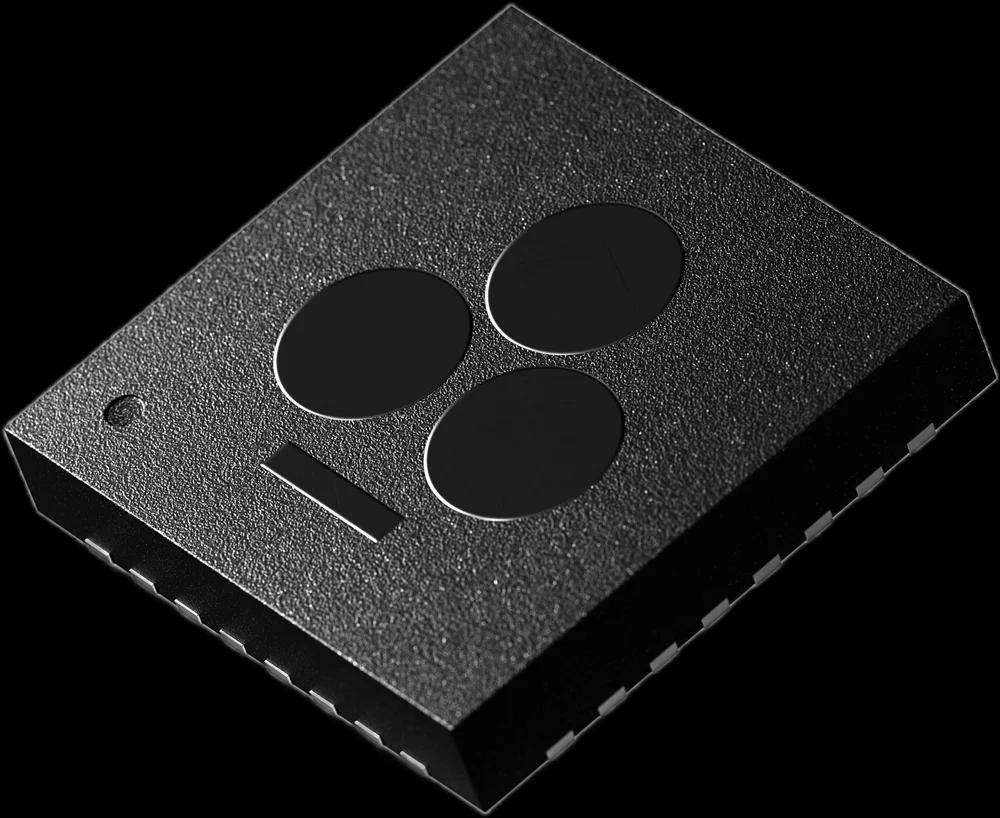
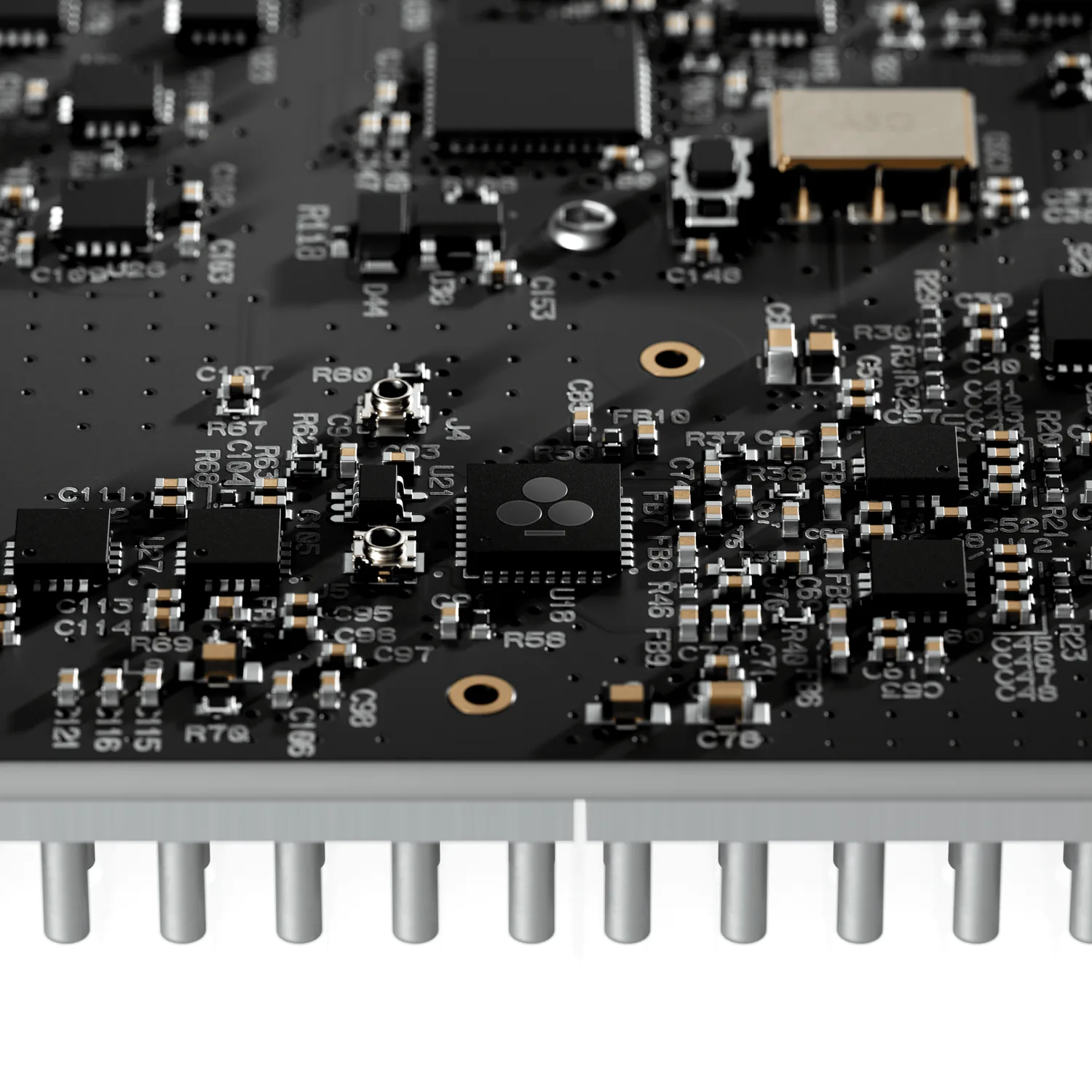
Ruby™ N1, a monolithic photonic chip on a dedicated line with US and European photonic foundry supply — chosen for resilience. Its randomness comes from quantum phase diffusion: the optical phase of the laser field performs a random walk, driven by spontaneous emission, and the laser is gain-switched so that each pulse starts with no memory of the last. Interference turns that phase into an intensity the on-chip photodiodes read.
Digitisation and conditioning
Quside mixed-signal electronics sample the photodetected signal into a raw bitstream, conditioned before it leaves the module. The construction and its mapping onto the SP 800-90B entropy-source architecture is documented in the qualification pack.
Runtime health monitoring
On-device metrology tracks the physical parameters of the source and quantifies entropy within the defined physical model, rather than inferring quality from output statistics alone. The module reports whether it remains inside its validated operating conditions.
Fabric integration
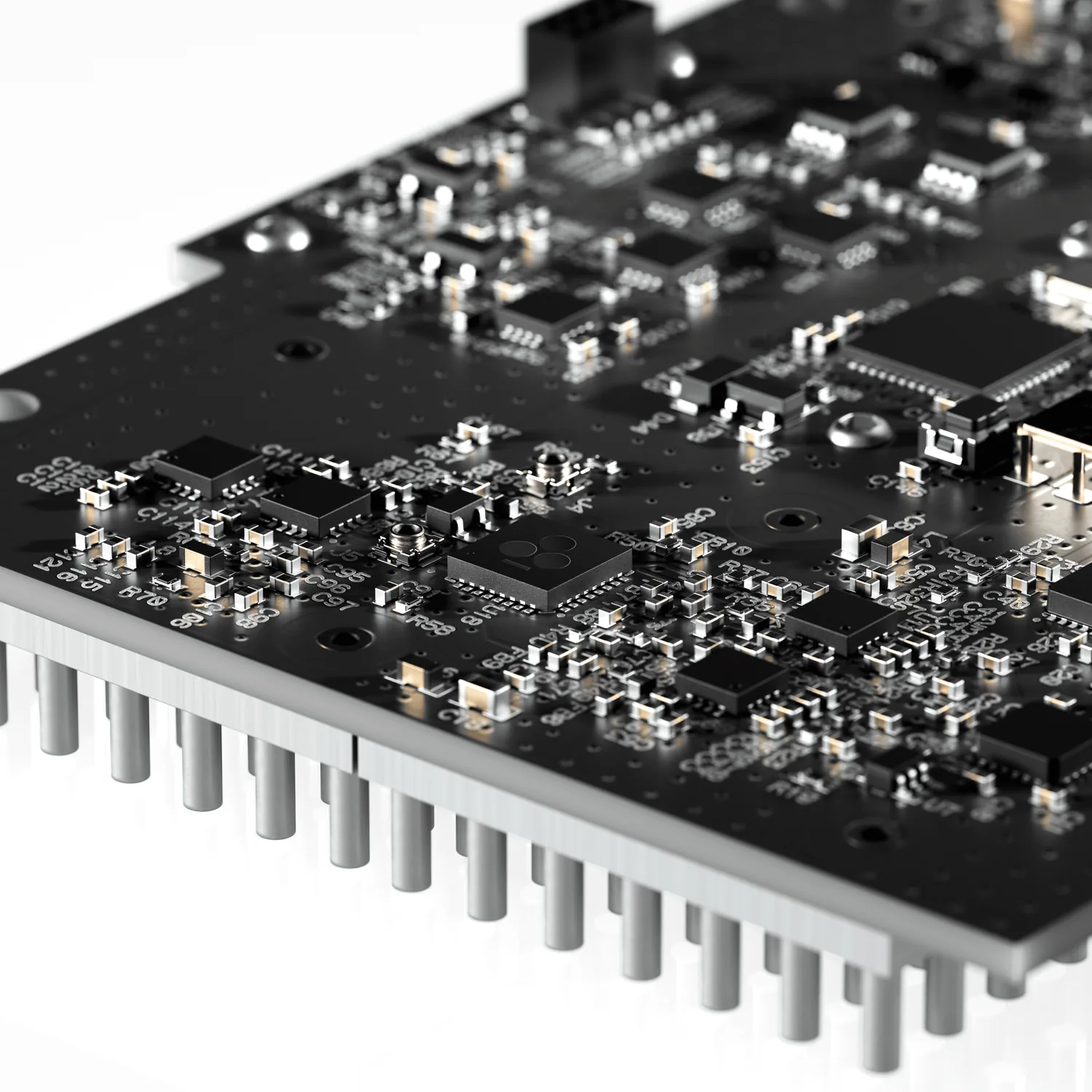
VHDL IP cores bring the entropy stream and the health state into your design over the FMC interface, so entropy and its evidence arrive where the cryptography actually runs. No general-purpose host is required in the data path.
The runtime loop, in order
- 01Physical process
A quantum-optical process with a written-down physical model generates the raw signal.
- 02Measurement
On-device metrology samples the parameters that describe how that process is behaving.
- 03Entropy estimate
Entropy is quantified within the defined physical model, rather than inferred from output statistics alone.
- 04Health state
The device reports whether it remains inside its validated operating conditions.
- 05Audit output
That health record is available to the host, so operations and compliance can inspect it.
The module reports entropy-source health continuously — one input to your security posture, alongside key management, protocol design and implementation quality. How runtime health is reported.
Evidence that survives a bid review.
Each piece is set out with the scope it was issued under, in wording you can lift straight into a submission.
NIST SP 800-90B
- Scope
- Quside PCIe One and FMC One.
- Establishes
- The entropy source has been validated against the SP 800-90B requirements for entropy sources.
- What it does not cover
- It covers the entropy source only — not a complete random bit generator, and not the systems built on top of it. It is scoped to the products named above, so confirm with us how that scope maps to the Nellite Plus A41 part you are qualifying. SP 800-90C, final in September 2025, describes how a validated source combines with an approved SP 800-90A deterministic mechanism.
ENS
- Scope
- Quside PCIe One and FMC One, version 1.0, under one CCN-CERT catalogue entry.
- Establishes
- Qualification for use in Spanish public-sector systems categorised up to Alta, the highest of the three ENS categories — which therefore also covers Media and Básica.
- What it does not cover
- Covers Quside PCIe One and FMC One at version 1.0. Alta is the top of the three ENS categories, so it carries Media and Básica with it. CCN’s Aprobado track, for systems handling classified material, is a separate route and not one Quside holds.
Space qualification
- Scope
- Qualification evidence supporting operation in GEO conditions.
- Establishes
- Environmental and lifetime evidence for the entropy engine.
- What it does not cover
- It is programme-specific evidence rather than a general certificate, and it applies to the engine rather than to every configuration built around it. Ask which parts of it map to your mission profile before it goes into a bid.
What the engineering work looks like.
On an FPGA design the integration question is not 'which driver' but 'where in the fabric'. The IP cores are supplied so that decision stays yours.
VHDL IP cores
Supplied with the module, for direct integration into your design. They bring both the entropy stream and the device health state into the fabric, so your logic can react to a health change rather than discovering it later.
Carriers and toolchains
FMC LPC, FMC HPC and FMC+ carriers. Compatibility with a specific carrier and toolchain is confirmed in a design review — tell us the board and the target device.
Host software, where there is a host
Some designs still front the module with a general-purpose host. Linux C and Python drivers exist across the platform, and the software work carries across from the PCIe product.
Reference material
Integration notes for the FMC interface are issued with the evaluation kit, and an engineer walks your team through the design against your own carrier.
Expected effort
Instantiating the core and reading entropy is bounded work for an FPGA engineer. Timing closure on a busy carrier and the programme evidence pack are the parts that deserve schedule.
Long-lifecycle support
These programmes outlive product generations. Put availability and change control on the table at design time rather than at end of life.
Where the module changes the design.
Systems where an FMC module is the natural place for the entropy source.
Key generation inside the FPGA fabric
When the cryptographic pipeline lives in programmable logic, routing entropy through a host CPU adds a component, a driver and a trust-boundary crossing that the design was built to avoid. The IP core delivers the stream directly into the fabric.
QKD and secure communications equipment
Systems in this class already run an FPGA carrier and already treat randomness as a first-class subsystem. An FMC mezzanine adds a locally verified source without changing the carrier architecture.
Satellite payloads and mission systems
Long qualification cycles reward evidence that can be reused. Space qualification evidence for Ruby™ N1 supports operation in GEO conditions; which parts of it apply is a programme-by-programme conversation, not a badge.
Sovereign defence programmes
Where randomness may not cross a network to reach the point of use, the source has to be inside the box and inside the trust boundary. Photonic foundry supply runs through both US and European foundries, chosen for resilience, and it can be described in the terms a programme office asks for.
What to ask for.
Every document has a name on it. Say which one you need and an engineer sends it.
Nellite™ Plus A41 datasheet
On requestThe electrical, mechanical and performance detail a design review needs, issued directly to your team.
VHDL IP core documentation
With the moduleIntegration guide for bringing the entropy stream and the health state into your fabric.
Certificate scope summary
PublishedWhat E178 and ENS Alta cover, and what they do not, written for a certification lead.
Space and programme evidence
On requestWhich parts of the Ruby™ N1 GEO qualification evidence apply to your mission profile.
Bring the carrier, the fabric and the programme dates.
Most of the useful conversation about an FMC integration is about where entropy enters the design and what evidence the programme will demand. Both are worth settling before the board spin, not after it.