
Start from the design you already have.
An appliance that serves the whole site, four parts that go inside your own hardware, and one measurement model. Give us the slot, the rate, the environment, the certificate your programme demands and the volume you are heading for, and the shortlist is short.
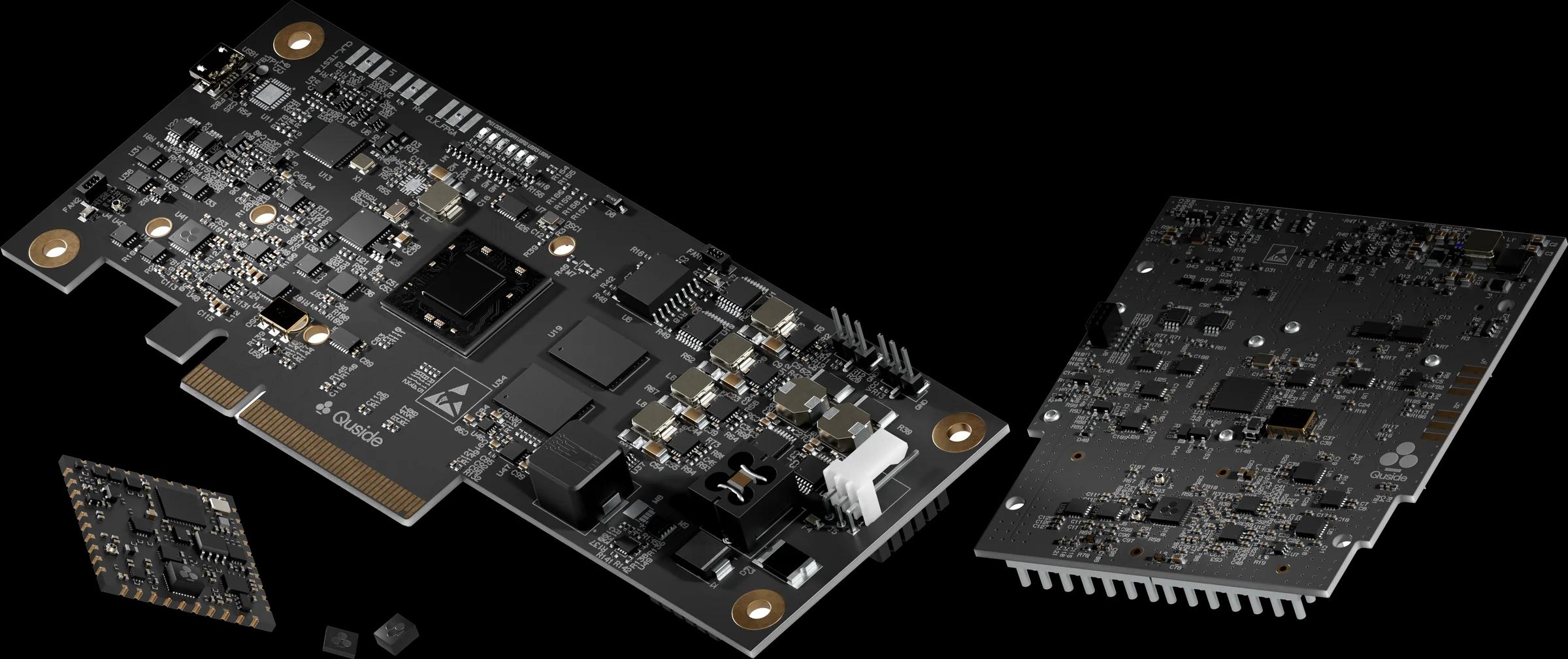
Where each family fits.
Entropy Core serves a whole site from your own racks. Garnet and Nellite are built on the Ruby™ N1 engine; Onyx is built on Ruby™ S1. The physics, the runtime metrology and the software stack are shared, so integration and qualification work carries across the family rather than starting again.

Entropy Core
For data centres where every server, HSM and service should draw from one measured source.
- Integration
- 1U rack or virtual appliance, on your network
- Useful throughput
- Sized per site
- Entropy engine
- In the datasheet, on request
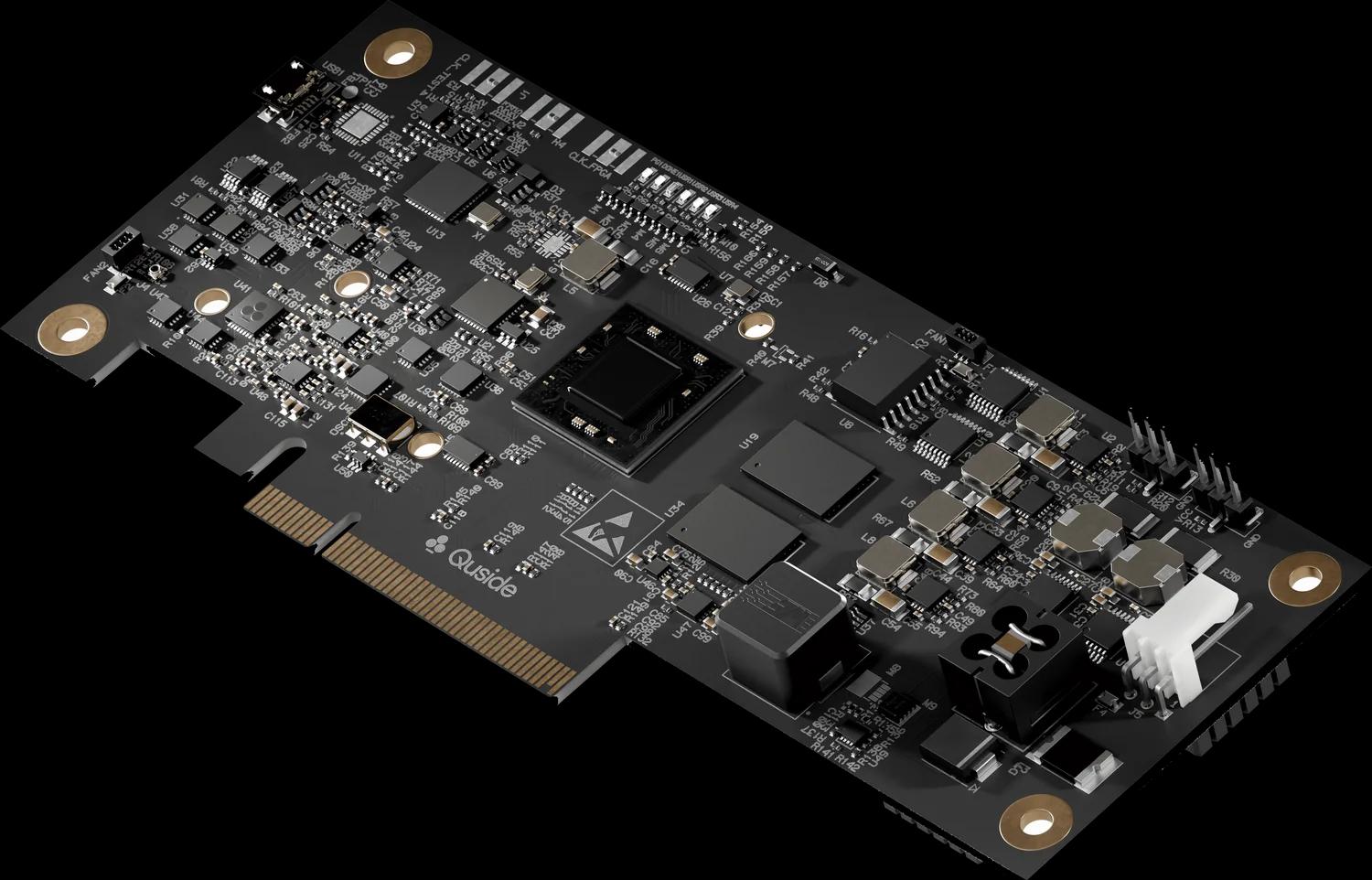
Garnet™ PCIe
For servers, security appliances and data-centre platforms that already have a slot.
- Integration
- PCIe Gen2 ×4, low-profile
- Useful throughput
- Up to 1 Gbit/s
- Entropy engine
- Ruby™ N1
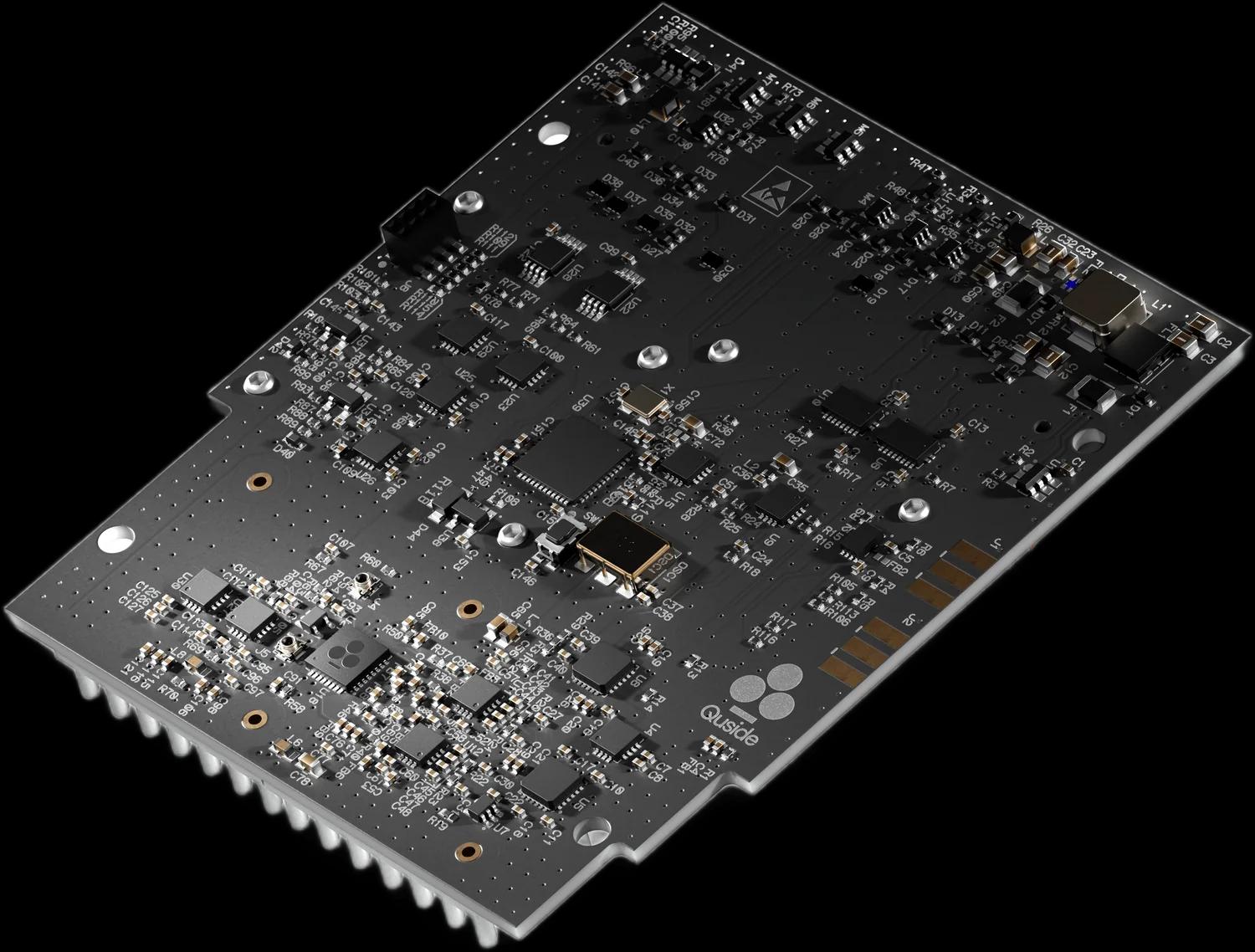
Nellite™ FMC
For FPGA systems where the entropy source has to sit inside the fabric you control.
- Integration
- FMC LPC/HPC and FMC+
- Useful throughput
- Up to 1 Gbit/s
- Entropy engine
- Ruby™ N1
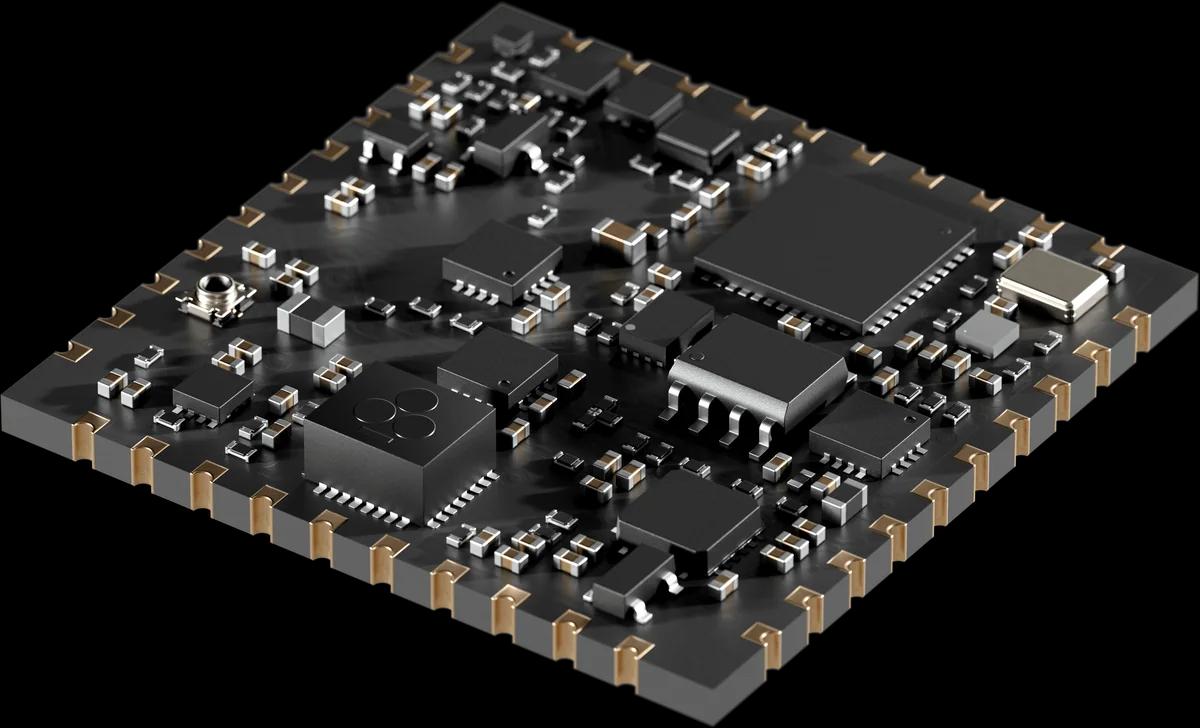
Onyx™ embedded
For roots of trust, secure boot and platform entropy inside a constrained product.
- Integration
- Compact embedded module
- Useful throughput
- 50–100 Mbit/s
- Entropy engine
- Ruby™ S1
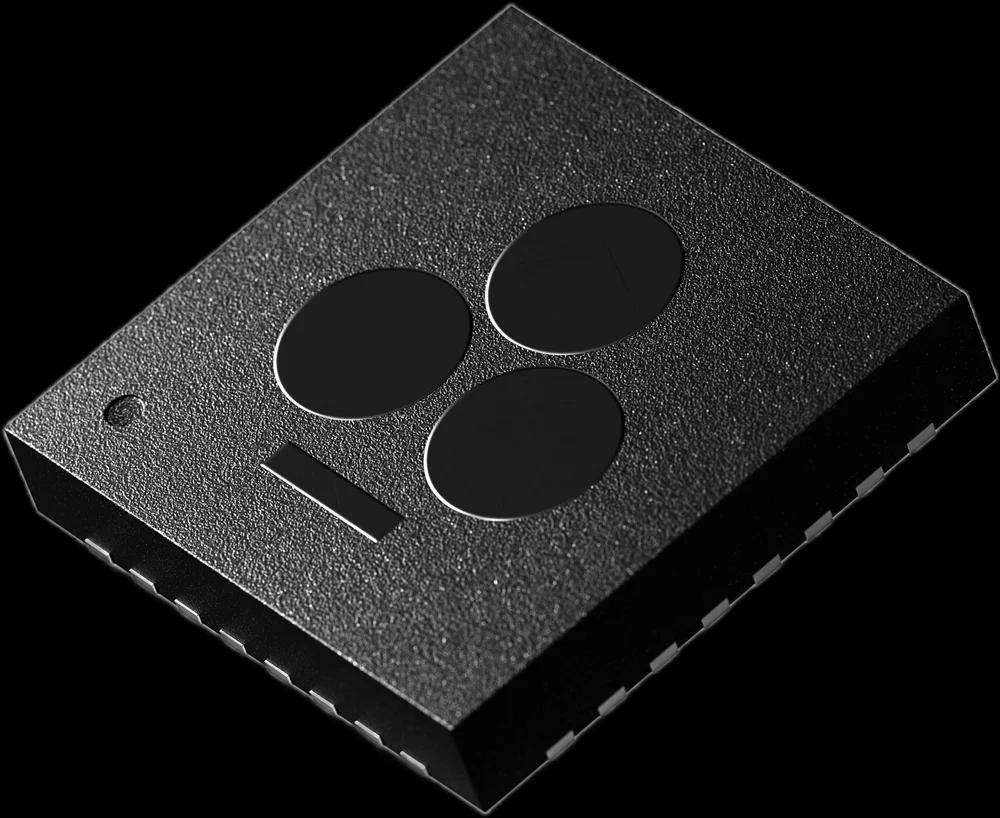
Ruby™ chips
For OEM and semiconductor teams designing the entropy source into the product itself.
- Integration
- The entropy chip, placed on your own board
- Useful throughput
- Up to 1 Gbit/s (N1)
- Entropy engine
- The engine behind every product above
Tell us about your design.
Answer whichever ones you already know. Most buyers are fixed on one axis — a slot, a certificate, a launch date — and the rest follows from it.
Where does the entropy source physically attach?
- Network appliance
A 1U or virtual appliance on your private network, serving every host, HSM and service on the site.
- PCIe
A Gen2 ×4 low-profile card in a server, appliance or storage platform.
- FMC
An FMC LPC/HPC or FMC+ mezzanine on an FPGA carrier board.
- Embedded module
A compact module on your own board, inside a constrained enclosure.
- Chip
A Quside entropy chip placed directly on your PCB as a component.
How much entropy does the design actually consume?
- 50–100 Mbit/s
Enough to seed and reseed a platform DRBG, generate device keys and support secure boot.
- Up to 1 Gbit/s
For key-generation services, HSM and PKI workloads, and equipment serving many concurrent sessions.
- Custom
Multiple sources in one chassis, or a rate tied to a specific consumption profile. Bring the peak, the sustained rate and the reseed cadence, and an engineer sizes it with you.
What does the product have to survive?
- Data centre
Rack-mounted servers, security appliances and infrastructure, with a slot to spare or none at all.
- Industrial
Board-level integration where size, power and unit cost drive the design.
- Defence
Programme-managed systems with long lifecycles and sovereign trust boundaries.
- Space
Payloads and mission systems, including operation in GEO conditions.
Space qualification evidence for Ruby™ N1 supports operation in GEO conditions. It is programme-specific evidence rather than a public certificate — ask which parts of it apply to your mission profile.
How much of the security architecture should the module carry?
- Entropy only
A local source feeding the cryptographic stack you already have.
- Entropy + root of trust
Ruby™ S1 paired with a Lattice MachXO5-NX root of trust, in one embedded module — Onyx™ X5.
Onyx™ X5 is configured per programme. Bring the security function you need alongside the entropy source and we will scope it with you.
What evidence does your qualification path demand?
- SP 800-90B
NIST entropy certificate E178, scoped to Quside PCIe One and FMC One.
E178 validates the entropy source. It does not validate a complete random bit generator, nor any system built on top of one. Confirm how its scope maps to the specific part you are qualifying.
- ENS
ENS Alta, the highest category of the Spanish national security framework, for Quside PCIe One and FMC One.
Covers Quside PCIe One and FMC One at version 1.0. Ask which part number your programme is specifying.
- Space qualification
Qualification evidence for Ruby™ N1 supporting operation in GEO conditions.
Where are you in the programme?
- Evaluation
One or two units on a bench, with drivers, to prove the integration in your own system.
- One-site pilot
One appliance on one site or cluster, with monitoring on from the first day, before sizing the rest.
- Programme
A qualified build for a named system, with assurance evidence attached to the bid.
- OEM production
Volume across a product family, reusing the same software and the same evidence for every unit in it.
- Chip-down integration
The entropy chip placed directly on your own board, designed in across a product generation.
If two axes point in different directions — a 1 Gbit/s appetite in an embedded power budget, say — put the tension in front of an engineer instead of picking a compromise off the table. Request an architecture review.
The same axes, side by side.
For when the shortlist is down to two and you need to know what actually differs.
| Axis | Entropy Core | Garnet™ PCIe | Nellite™ FMC | Onyx™ embedded | Ruby™ chips |
|---|---|---|---|---|---|
| Integration point | 1U rack or virtual appliance, on your network | PCIe Gen2 ×4, low-profile | FMC LPC/HPC and FMC+ | Embedded module | Chip on your own board |
| Useful throughput | Sized per site | Up to 1 Gbit/s | Up to 1 Gbit/s | 50–100 Mbit/s | Up to 1 Gbit/s (N1) |
| Entropy engine | In the datasheet, on request | Ruby™ N1 — phase diffusion | Ruby™ N1 — phase diffusion | Ruby™ S1 — polarisation switching | Ruby™ N1 and Ruby™ S1 |
| Host software | REST HTTP API and QRNG Open API; no host driver | Linux C and Python drivers | VHDL IP cores included | Embedded host interface, defined per integration | OEM integration support |
| Security function | Entropy, shared across the site | Entropy | Entropy | Entropy (S1). Root of trust in the same module is per programme (X5) | Entropy source |
| Assurance evidence | Entropy quality recorded per appliance and site ⁵ | SP 800-90B E178 ¹ · ENS Alta ² | SP 800-90B E178 ¹ · ENS Alta ² | Runtime health monitoring ³ | Space qualification evidence, GEO conditions ⁴ |
| Environment fit | Data centre, one pool per site | Data centre, appliances | Defence, space, secure communications | Embedded, industrial, defence | Set by the product you build around it |
| Volume path | One-site pilot → per-site rollout | Evaluation → OEM qualification | Evaluation → programme | Programme → OEM production | OEM production → chip-down integration |
| Lifecycle status | One-site pilots | Available | Available | Onyx™ S1 available · X5 per programme | In production |
- ¹ NIST SP 800-90B entropy certificate E178 is scoped to Quside PCIe One and FMC One. It validates the entropy source, not a complete random bit generator and not systems built on top of it. Confirm how that scope maps to the part you are qualifying.
- ² Quside PCIe One and FMC One, version 1.0, are qualified at ENS Alta — the highest of the three categories of the Spanish national security framework, which therefore also covers Media and Básica. It is a qualification under a national scheme rather than a certification, and it runs to 31 December 2026.
- ³ Onyx™ S1 is built on Ruby™ S1 and reports runtime health the same way as the rest of the platform. The E178 certificate does not cover it; its scope is stated above.
- ⁴ Qualification evidence supporting operation in GEO conditions. It is programme-specific evidence rather than a public certificate.
- ⁵ Entropy Core carries no certificate of its own: E178 and ENS Alta are scoped to Quside PCIe One and FMC One and do not extend to it. What it provides is a running record of entropy quality, exposed to your monitoring.
Drop into your existing stack.
Entropy Core answers standard HTTP clients on your private network, so the hosts that use it need no driver. Linux C and Python drivers expose the entropy stream and the device health state on the PCIe products; VHDL IP cores bring both into an FPGA fabric. Whichever integration point you pick, the software work carries across the family.
What ships with the hardware
- REST HTTP API · QRNG Open APIEntropy Core
- Linux C / Python driversGarnet™ PCIe
- VHDL IP coresNellite™ FMC
- Embedded host interfaceOnyx™
Integration guides and driver packages are issued with the evaluation kit for the interface you are targeting.
Integrating above the driver
Most systems consume the card by seeding an approved deterministic mechanism from it and reseeding appropriately, then exposing the device health state to their own monitoring and audit path. Which cryptographic library or key-management platform sits above that is your architecture, and the integration notes are written for the one you are actually using.
Tell us the stack and the interface and an engineer will go through it with you.
Still between two of them?
Send the interface, the throughput you consume, the environment and the qualification date. An engineer comes back with the integration path that fits and what it takes to prove it in your own system.