
A quantum entropy source in a slot you already have.
For servers, security appliances and data-centre platforms that need locally generated entropy, at up to 1 Gbit/s, without redesigning the cryptographic stack above it.
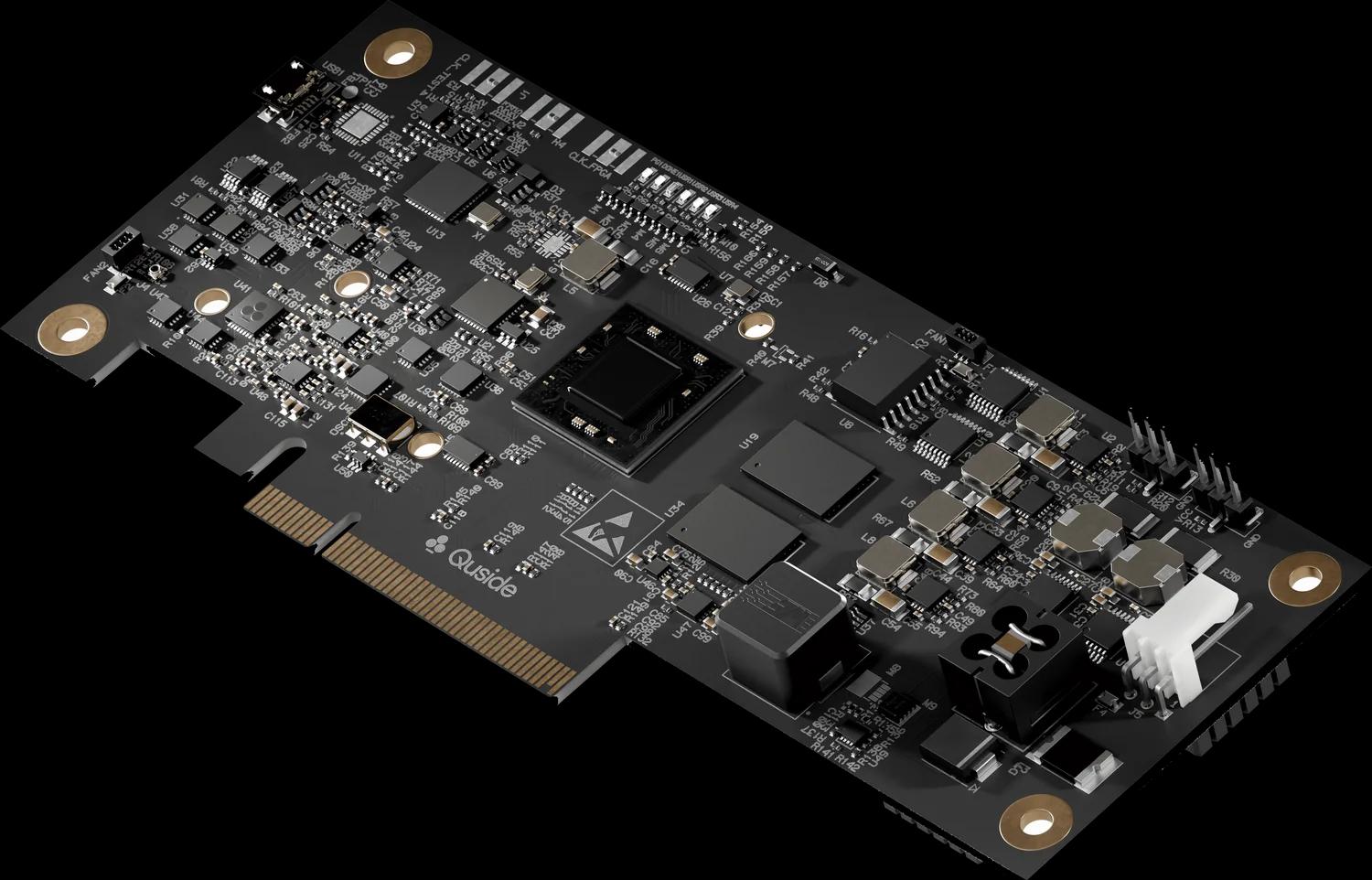
Garnet™ Plus A41 and Garnet™ X5 ship today on the same board, with Linux C and Python drivers and evaluation units for integration work in your own system.
NIST SP 800-90B, scoped to Quside PCIe One and FMC One. It validates the entropy source, not a complete random bit generator.
The highest category of the Spanish national security framework, for Quside PCIe One and FMC One at version 1.0.
When Garnet is the right card.
It fits when the host is a standard server or appliance, the entropy consumer is software, and the trust boundary has to stop at the chassis.
Architectures
- Security appliances and firewalls that seed and reseed a platform DRBG in software today.
- HSM, PKI and key-management platforms generating key material continuously.
- Data-centre and cloud-infrastructure hosts where the trust boundary stops at the chassis.
- Server and appliance product lines being qualified for a new generation.
Who usually specifies it
- Platform and security architects choosing an entropy source for a product generation.
- Firmware and Linux engineers who will do the driver and consumer integration.
- Compliance and certification leads who need certificate scope stated precisely.
- OEM programme managers costing entropy across a product family.
Specifications.
Power, thermal and mechanical figures depend on your chassis and airflow, so ask and an engineer sends the ones that apply to your build.
| Interface | PCIe Gen2 ×4 |
|---|---|
| Form factor | Low-profile PCIe card |
| Useful entropy rate | Up to 1 Gbit/s |
| Entropy source | Ruby™ N1 — quantum phase diffusion |
| Host requirements | A PCIe Gen2 ×4 slot and a Linux host Supported kernel and distribution matrix is issued with the driver package. |
| Host software | Linux C and Python drivers |
| Runtime health | On-device metrology, reported to the host |
| Lifecycle status | Garnet™ Plus A41 and Garnet™ X5 available |
| Power, thermal and mechanical | Available on request — ask an engineer Ask for the figures that apply to your chassis and airflow. |
The board ships in two configurations. Garnet™ Plus A41 delivers the entropy source to the host. Garnet™ X5 is the cryptographic acceleration configuration: post-quantum operations and DRBG seeding execute on the card itself, next to the quantum source that feeds them. Interface, form factor and entropy source are the same for both. Which operations run on the card.
What is actually on the card.
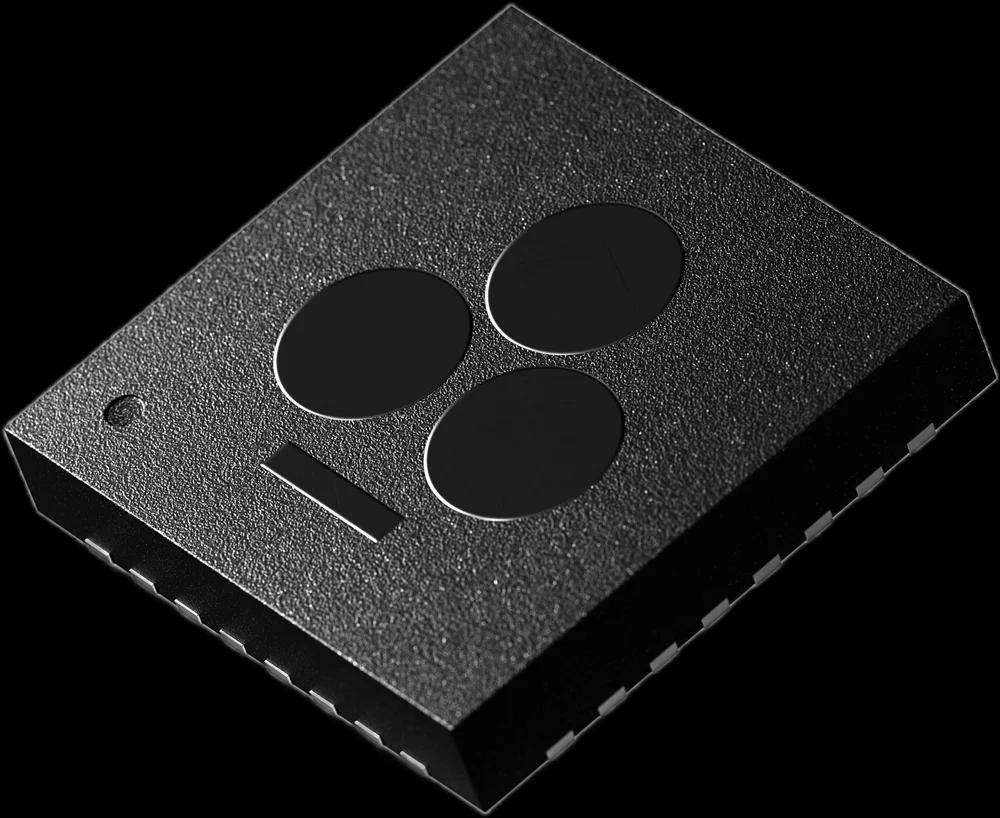
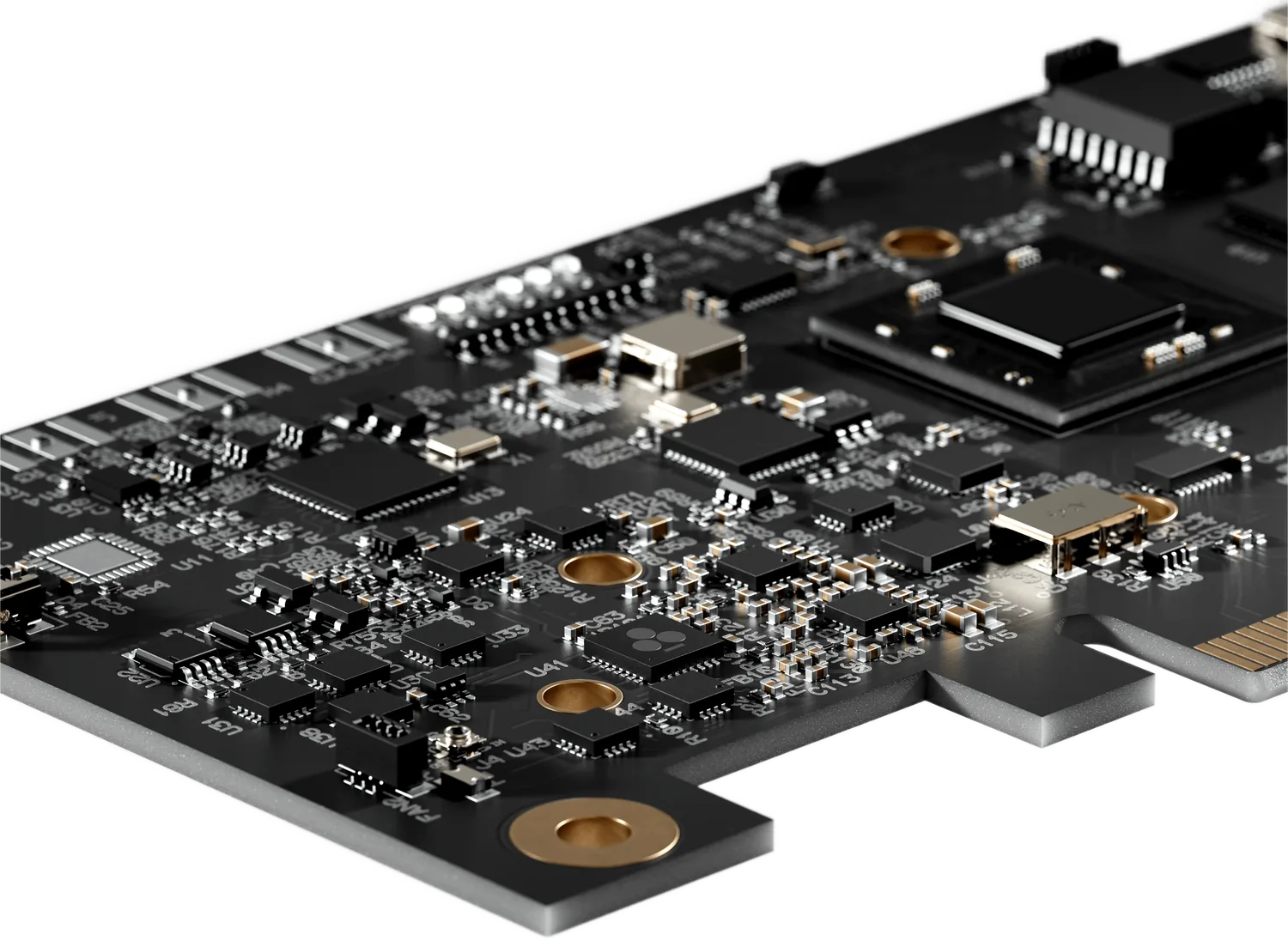
From the photonic chip to the driver on your host. The process is quantum-optical because that kind of process has a physical model the card can measure itself against.
Entropy engine
Ruby™ N1, a monolithic photonic chip built on a dedicated line with US and European foundry supply. Its randomness comes from quantum phase diffusion: the optical phase of the laser field performs a random walk, driven by spontaneous emission, and the laser is gain-switched so that each pulse starts with no memory of the last. Interference turns that phase into an intensity the on-chip photodiodes read.
Digitisation and conditioning
Quside mixed-signal electronics sample the photodetected signal into a raw bitstream, which is conditioned before it is presented to the host. The construction, and how it maps onto the SP 800-90B entropy-source architecture, is documented in the qualification pack rather than summarised here.
Runtime health monitoring
On-device metrology tracks the physical parameters of the source and quantifies entropy within the defined physical model, rather than inferring quality from output statistics alone. The card reports whether it remains inside its validated operating conditions.
Host integration
Linux C and Python drivers expose the entropy stream and the health state to the host, so the cryptographic stack above reads from a local device rather than from an assumption about the platform pool.
The runtime loop, in order
- 01Physical process
A quantum-optical process with a written-down physical model generates the raw signal.
- 02Measurement
On-device metrology samples the parameters that describe how that process is behaving.
- 03Entropy estimate
Entropy is quantified within the defined physical model, rather than inferred from output statistics alone.
- 04Health state
The device reports whether it remains inside its validated operating conditions.
- 05Audit output
That health record is available to the host, so operations and compliance can inspect it.
The health state tells you whether the source is still behaving the way it did when it was validated, for as long as the card is in service. How Locally Verified Entropy works.
Evidence you can lift into a qualification plan.
Each certificate is set out with the scope it was issued under, in wording you can quote directly — including how the scope of E178, which covers Quside PCIe One and FMC One, maps to the A41 part you are qualifying.
NIST SP 800-90B
- Scope
- Quside PCIe One and FMC One.
- Establishes
- The entropy source has been validated against the SP 800-90B requirements for entropy sources.
- What it does not cover
- It covers the entropy source only — not a complete random bit generator, and not the systems built on top of it. It is scoped to the products named above, so confirm with us how that scope maps to the Garnet Plus A41 part you are qualifying. SP 800-90C, final in September 2025, describes how a validated source combines with an approved SP 800-90A deterministic mechanism.
ENS
- Scope
- Quside PCIe One and FMC One, version 1.0, under one CCN-CERT catalogue entry.
- Establishes
- Qualification for use in Spanish public-sector systems categorised up to Alta, the highest of the three ENS categories — which therefore also covers Media and Básica.
- What it does not cover
- Covers Quside PCIe One and FMC One at version 1.0. Alta is the top of the three ENS categories, so it carries Media and Básica with it. CCN’s Aprobado track, for systems handling classified material, is a separate route and not one Quside holds.
What the engineering work looks like.
The driver work is small and bounded. Mapping the certificate scope onto your qualification plan is the part worth scheduling properly.
Where the card sits in the stack
The driver hands the host an entropy stream and a device health state. In most systems that stream seeds an approved deterministic mechanism, which is what the consuming application actually calls, and the health state is wired into the same monitoring and audit path as the rest of the platform.
Which cryptographic library or key-management platform sits above that is your architecture. The integration notes issued with the evaluation kit are written for the one you are actually using.
Drivers and APIs
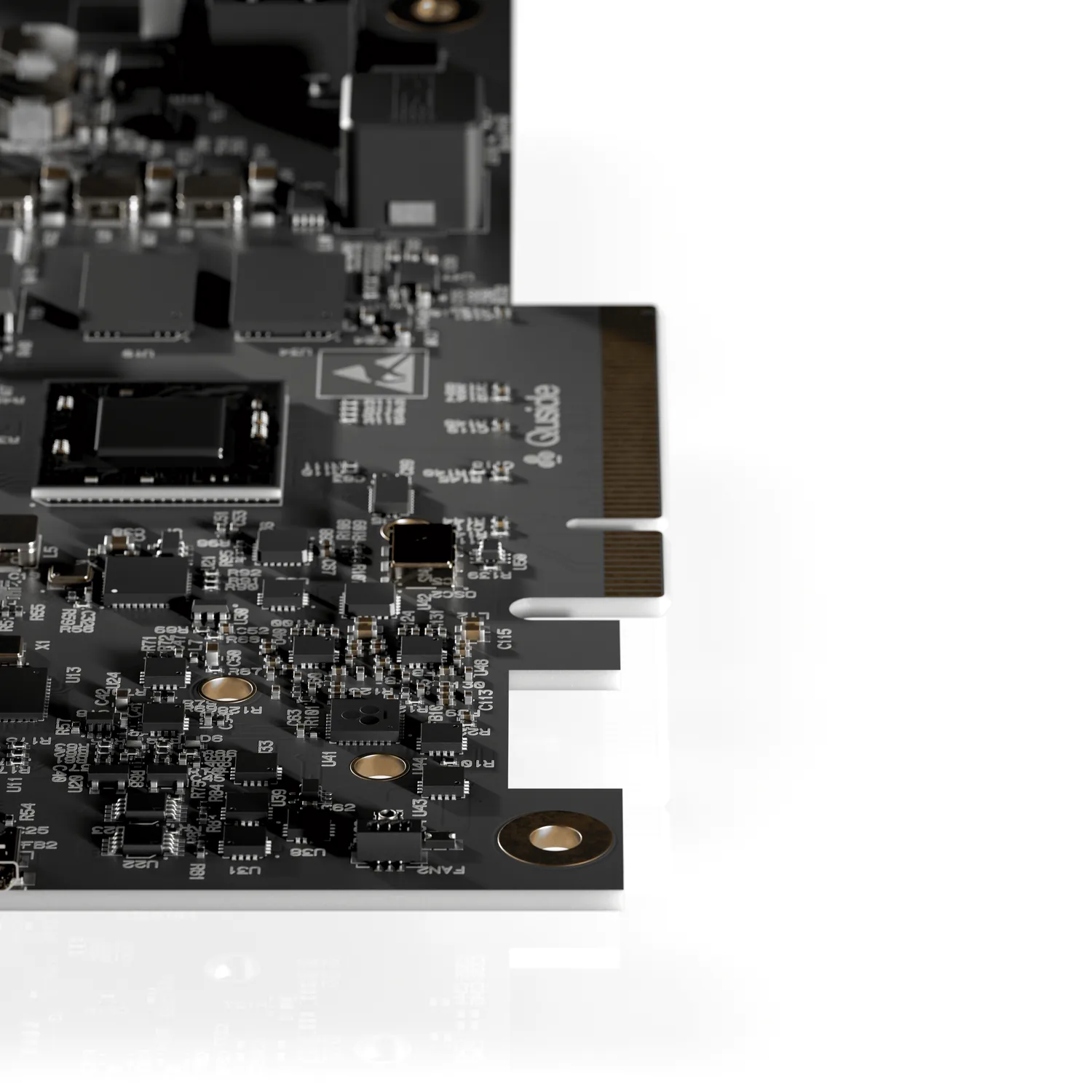
Linux C and Python drivers expose the entropy stream and the device health state to the host.
Operating systems
Linux. The supported kernel and distribution matrix ships with the driver package; if your platform is not on it, tell us which one it is.
Reference material
Integration notes for the PCIe interface are issued with the evaluation kit, written for the stack you are actually running.
Expected effort
Seating the card and reading entropy through the driver is a short, bounded task. Wiring the health state into your own monitoring, and mapping the certificate scope onto your qualification plan, is the part worth scheduling properly.
Where the card changes the design.
Systems where the entropy source has to sit inside the chassis.
Seeding and reseeding a platform DRBG
An approved deterministic generator depends on strong seeding, correct construction and appropriate reseeding from a trusted entropy source. Garnet supplies that source locally, and reports its health while the system runs, so the dependency underneath the DRBG stops being an assumption.
Key generation in an HSM or PKI platform
Issuance platforms generate key material continuously and cannot pause when an entropy pool runs thin. A local source at up to 1 Gbit/s removes the throughput question, and the health record gives audit something specific to inspect.
Sovereign and air-gapped infrastructure
Where randomness may not cross a network to reach the point of use — because of sovereignty rules, an air gap, or because non-local randomness cannot be verified where it is consumed — the source has to sit inside the chassis. That is the case Garnet is built for.
Qualifying a server or appliance product line
Qualify the card once at platform level, then reuse the same drivers and the same evidence across the family. The integration effort is spent once and amortised across the generation.
What to ask for.
Every document has a name on it. Say which one you need and an engineer sends it.
Garnet™ Plus A41 datasheet
On requestThe electrical, mechanical and performance detail a design review needs, issued directly to your team.
Certificate scope summary
PublishedWhat E178 and ENS Alta cover, and what they do not, written for a certification lead.
Driver package and integration notes
With the evaluation kitLinux C and Python drivers, the supported platform matrix and the host integration notes.
Qualification pack
On requestThe entropy-source architecture and health-test documentation a laboratory or certification body will ask for.
Put one in your own system.
Run your own consumers against it and read the health state yourself. Tell us the chassis and the Linux distribution you are targeting when you ask.