
Take the platform on its own, or take the whole thing.
Most organisations buying a trusted hardware layer already run something above it — a post-quantum library, a PKI, a key management estate. Quside sells the platform under what you have, or specifies and delivers the whole system with the partners who build those layers.
Which route fits your system.
Which one fits depends on how much of the stack above the hardware you have already decided.
The platform on its own
You run your own cryptographic stack.
You already have the algorithms, the key management and the operational tooling you want. Quside supplies the trusted hardware underneath: modules that generate and verify their own entropy and take critical trust operations off your hosts. What runs above stays yours.
Under software you already run
You have a PQC library or a PKI you are not replacing.
A post-quantum implementation or a certificate lifecycle system you have already licensed and deployed does not need to move. The platform goes underneath it, and the seam between where key material comes from and where it is used is one we have worked through with the vendors above us.
The complete solution
You would rather buy the whole thing once.
Hardware, algorithms and certificate lifecycle, specified together and delivered as one system. You hold one architecture conversation instead of three, and the integration between the layers is settled before the programme starts.
The layers around the source, and who covers them.
Your integration touches more than the module: the algorithms that consume its randomness, the estate that issues and renews the keys, the logic a root-of-trust function runs on, and the photonics inside the part itself. Each of those layers has a specialist working in it.
PQShield
Implementations of the schemes standardised in FIPS 203, 204 and 205. Every one of them consumes randomness for key generation, encapsulation and nonces, which is the layer the platform sits directly underneath.
Keyfactor
Certificate authorities and key management estates are among the heaviest consumers of key material in an enterprise, and they depend on strong seeding and appropriate reseeding from a trusted source.
Lattice
The programmable logic a hardware root-of-trust function runs on. Onyx X5 carries it in the same module as the entropy source, so the function and its randomness are one part.
Coherent
VCSELs and material behind Ruby S1, alongside US and European photonic foundry supply for Ruby N1. Two independent optical routes stand behind the modules you deploy.
Quside does not deliver randomness over a network. Every route above puts the source inside the same trust boundary as the system consuming it, because entropy that arrives over a link cannot be verified where it is used.
You are choosing a supplier for the next ten years.
The design is ours. Quside draws the photonic and electronic chips and defines the physical model its metrology measures against, and what is outsourced is fabrication rather than the design itself. Everything an estate-wide rollout turns on after that is filed beside this — where the parts come from, what has been qualified and against what, and who answers for the modules once they are in service.
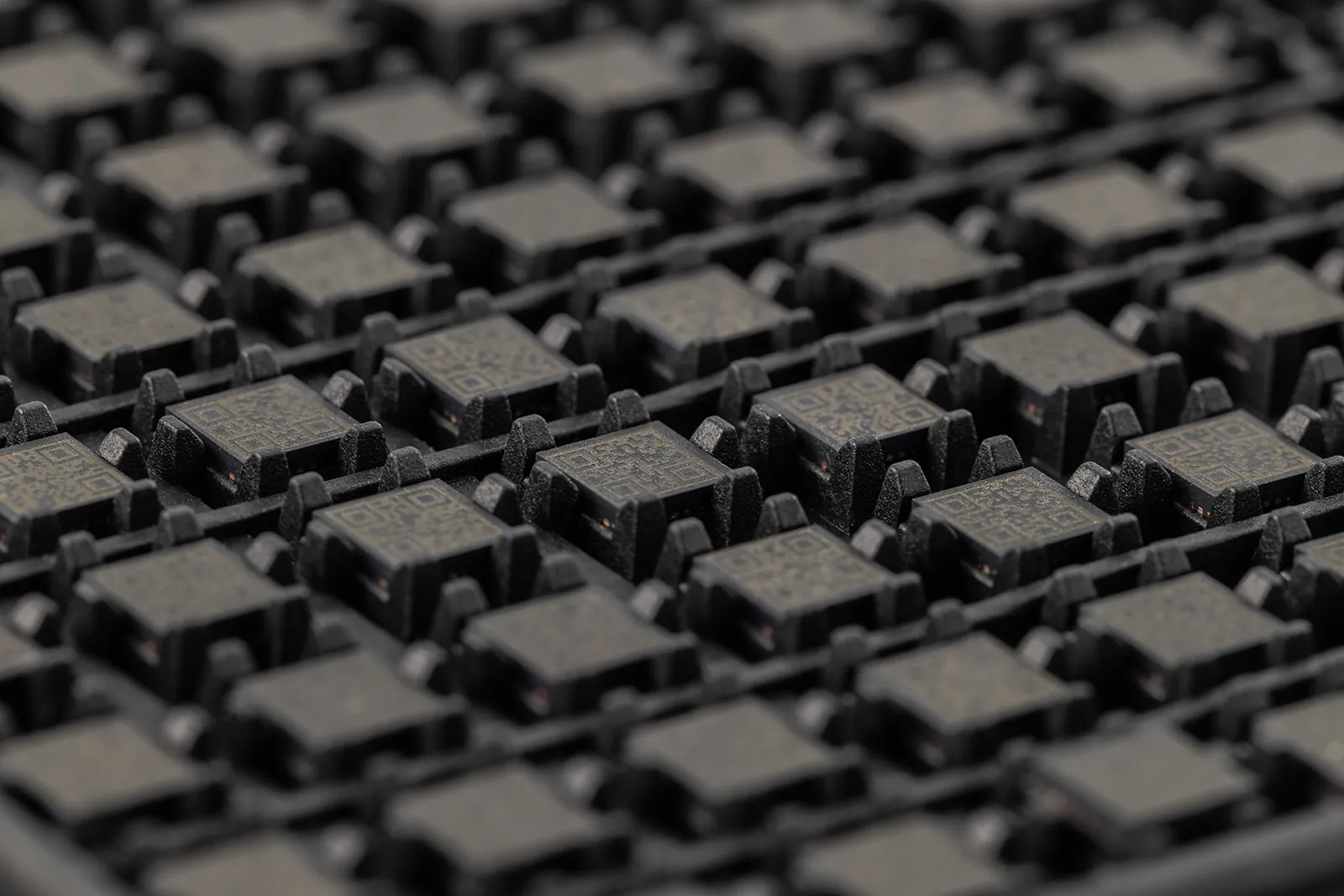
The design is ours.
- Photonic and electronic chip design owned in-house, with fabrication outsourced.
- 90+ patents behind the entropy engine.
Supply runs across two jurisdictions and two optical routes.
- US and European foundry supply, chosen for resilience.
- Coherent VCSELs and material behind Ruby S1, independent of the Ruby N1 line.
The evidence is independent, and its scope is written down.
- Quside PCIe One and FMC One are qualified at ENS Alta, version 1.0 — the highest of the three categories in the Spanish national framework.
- The same two products hold entropy certificate E178, which validates the entropy source rather than a complete random bit generator.
The same company builds them and answers for them.
- Production and final test in-house; modules ship fully tested.
- Barcelona, independent since 2018.
The rest of the platform.
The two layers inside every module, and the route for building the hardware into your own product.
The platform
What a Quside module is, and the operations it can be asked to perform.
Read the page →Cryptographic acceleration
Post-quantum offloading, root-of-trust functions and DRBG seeding, executed on the module.
Read the page →Building it into your own product
Qualifying a module as a component and taking the engine onto your own board, for a product family rather than an estate.
Read the page →Buying the whole thing
Tell us the algorithms you are moving to, the PKI you already run and the estate you are deploying across. That is usually enough to say which route fits, which operations the platform can take on for you, and who else needs to be in the room.
Building cryptographic software?
Your algorithms are only as unpredictable as what seeds them. A module that reports its own health gives your customers an assurance argument they can check, and Quside sells into the accounts that ask for exactly that. If your layer belongs above ours, come and talk.