
A root of trust needs entropy that never leaves the box.
For embedded platforms, workstations and portable systems where the entropy source has to be a component on your board — at a size, power and cost point a product family can carry.
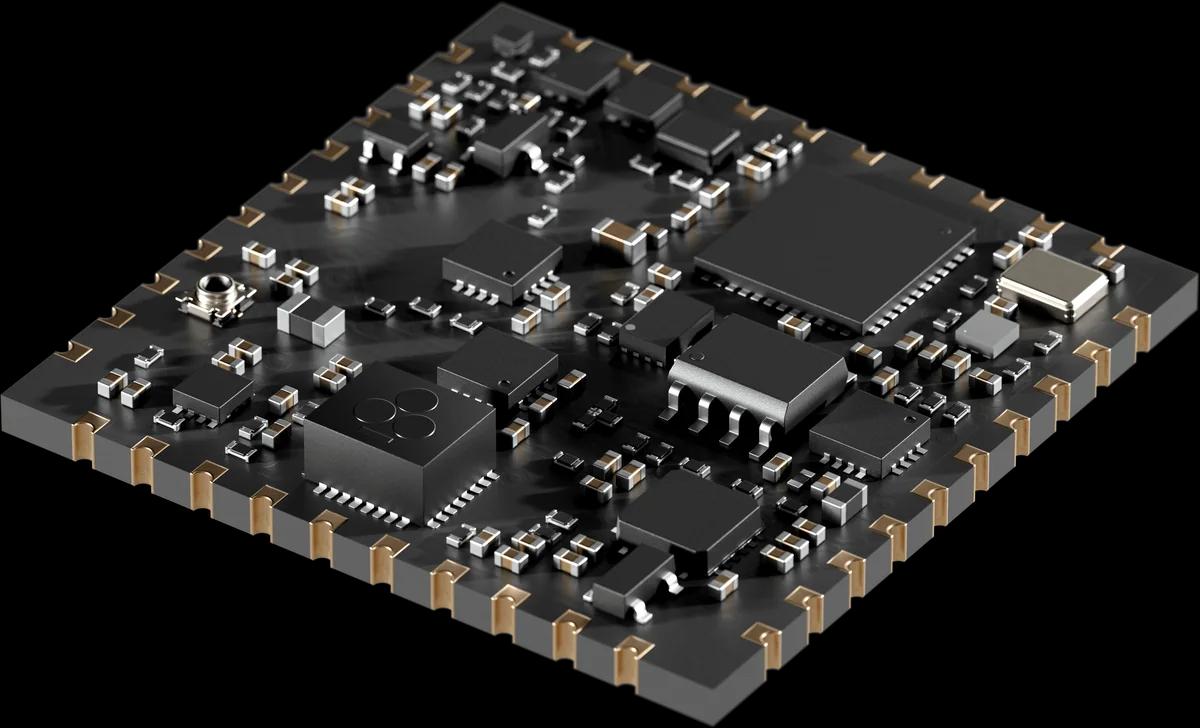
The same source, with or without a root of trust.
Onyx™ S1 delivers the entropy source on its own. Onyx™ X5 puts a hardware root of trust in the same module as the source.
Onyx™ S1
The entropy source on its own, at a size, power and cost point that suits a board inside a product rather than a card inside a server. First units have shipped to defence customers.
- Security function
- Entropy source
- Useful entropy rate
- 50–100 Mbit/s
- Entropy source
- Ruby™ S1 — polarisation switching from a VCSEL
Onyx™ X5
Ruby™ S1 paired with a Lattice MachXO5-NX root of trust, for systems that need a local entropy source and a broader hardware security function in the same compact module.
- Security function
- Entropy source + hardware root of trust
- Root of trust
- Lattice MachXO5-NX
- Entropy source
- Ruby™ S1 — polarisation switching from a VCSEL
- Configuration
- Scoped per programme
When Onyx is the right module.
It fits when there is no slot to fill, the unit cost matters because you are shipping many of them, and the security function it serves lives on the same board.
Architectures
- Hardware roots of trust and secure-boot chains inside an embedded platform.
- Device identity and key injection during manufacture and provisioning.
- Crypto modules and security subsystems embedded in a larger product.
- Defence and critical systems where the source must sit inside the enclosure.
Who usually specifies it
- Embedded and hardware engineers placing a module on a constrained board.
- Product security architects designing a root of trust for a product family.
- OEM programme managers costing entropy across a generation of units.
- Defence integrators with sovereignty constraints on where randomness is generated.
Specifications.
Rows that depend on your board, enclosure or duty cycle are settled in a design review.
| Integration point | Compact embedded module, on your own board |
|---|---|
| Entropy source | Ruby™ S1 — polarisation switching from a VCSEL |
| Useful entropy rate | 50–100 Mbit/s (Onyx™ S1) |
| Security function | Entropy (S1), or entropy plus a Lattice MachXO5-NX root of trust (X5) |
| Host interface | Embedded host interface, defined per integration — ask an engineer The electrical and mechanical interface is settled in a design review against your board, not chosen from a catalogue. |
| Form factor and mechanical | Available on request — ask an engineer Drawings are issued against your board area, enclosure and connector constraints. |
| Power and thermal | Available on request — ask an engineer Ask for the figures that apply to your board, enclosure and duty cycle. |
| Runtime health | On-device metrology, reported to the host system |
| Lifecycle status | Onyx™ S1 and Onyx™ X5 available |
The source travels with the system that consumes it.
Inside a workstation, a field enclosure, a deployable rack or a handheld device — not reached over a network. Randomness delivered over a network cannot be verified where it is used, so this is a component you put in your product rather than a service you call.
Every portable build is a different host, a different interface and a different volume. Bring those three and an engineer comes back with the configuration that fits your enclosure.
A different physics route, the same measurement discipline.
Ruby™ N1 uses quantum phase diffusion. Ruby™ S1 takes a different route — polarisation switching from a VCSEL — chosen because its supply chain makes volume and cost credible. The measurement discipline on top is the same.
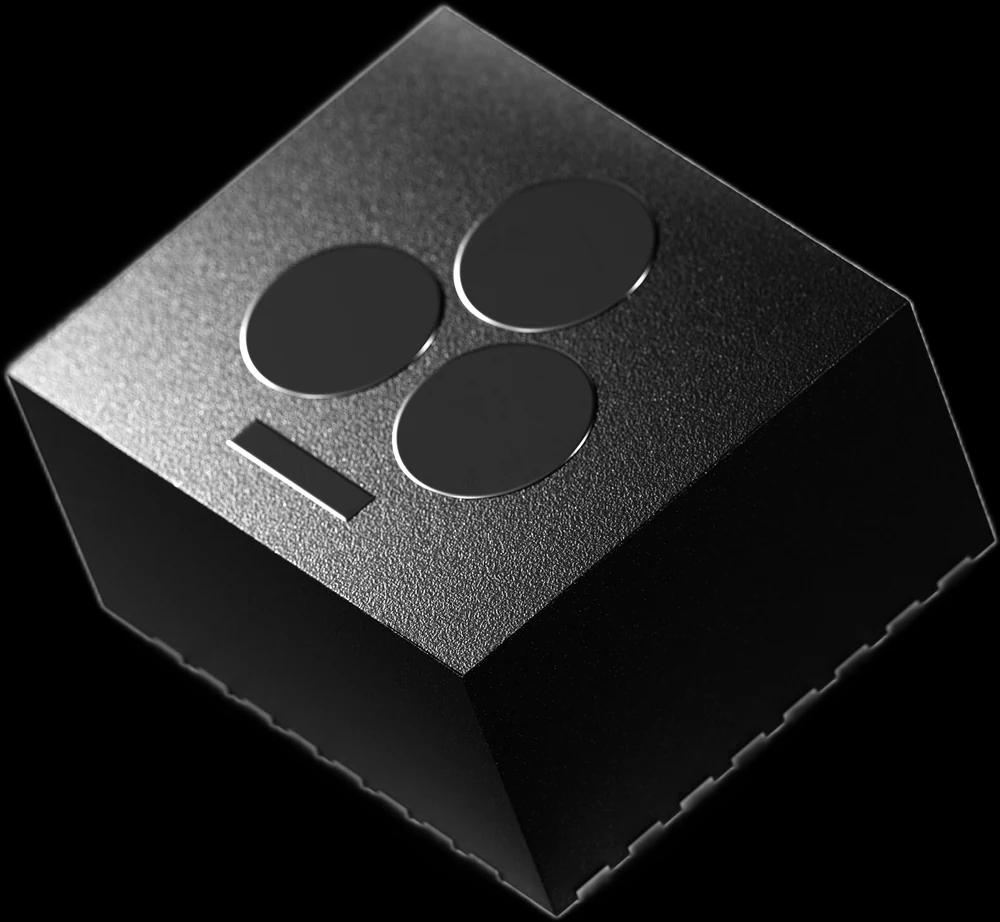
Entropy engine
Ruby™ S1 derives randomness from polarisation switching in a VCSEL — the same class of device used for face recognition and proximity sensing in phones. Coherent supplies the VCSELs and the material. That supply chain is what makes a much lower size, power and cost point credible at volume.
Digitisation and conditioning
The optical signal is digitised and conditioned on the module before it is presented to the host system. The construction, and how it maps onto the SP 800-90B entropy-source architecture, is documented in the qualification pack rather than summarised here.
Runtime health monitoring
The same measurement discipline as the rest of the platform: on-device metrology tracks the physical parameters of the source, quantifies entropy within the defined physical model, and reports whether the module remains inside its validated operating conditions.
Host integration
The entropy stream and the health state are presented to your host over the embedded interface agreed for your design. On Onyx™ X5, the Lattice MachXO5-NX root of trust sits alongside the source in the same module.
The runtime loop, in order
- 01Physical process
A quantum-optical process with a written-down physical model generates the raw signal.
- 02Measurement
On-device metrology samples the parameters that describe how that process is behaving.
- 03Entropy estimate
Entropy is quantified within the defined physical model, rather than inferred from output statistics alone.
- 04Health state
The device reports whether it remains inside its validated operating conditions.
- 05Audit output
That health record is available to the host, so operations and compliance can inspect it.
The module reports entropy-source health continuously — one input to your security posture, alongside key management, protocol design and implementation quality. How Locally Verified Entropy works.
What Onyx brings to a security review.
Onyx™ S1 runs the Ruby™ S1 engine and reports runtime health exactly as the rest of the platform does. Here is the evidence that comes with it, and where the certificate boundary falls — E178 covers Quside PCIe One and FMC One.
NIST SP 800-90B
- Scope
- Quside PCIe One and FMC One.
- Establishes
- That the entropy source in those products has been validated against the SP 800-90B requirements for entropy sources.
- What it does not cover
- A certificate covering the exact part you ship, if your programme demands one — the Onyx modules are not within E178’s scope. They run Ruby™ S1 and share the runtime measurement model, which is an engineering statement rather than a certification one. Talk to us about which product and which timeline meets your requirement.
Runtime health monitoring
- Scope
- The Onyx™ family, built on Ruby™ S1.
- Establishes
- The same measurement discipline as the rest of the platform: entropy quantified within a defined physical model, with the device reporting whether it remains inside its validated operating conditions.
- What it does not cover
- The third-party certificate, if your programme needs one alongside this. Runtime health is what the hardware does, evidenced by the qualification pack: it is not a third-party certificate and should never be presented as one.
What the engineering work looks like.
Embedded integration is a board-level conversation before it is a software one. The earlier it happens, the cheaper it is — placement, interface and health reporting are all easier to settle before the first spin.
Interface and placement
The electrical and mechanical interface is agreed against your board rather than picked from a catalogue. Bring the schematic constraints, the available area and the power budget.
Drivers and APIs
Linux C and Python drivers exist across the platform and the software work carries across from the PCIe and FMC products. The specific host binding for an embedded target is confirmed for your platform.
Operating systems
Linux, and bare-metal or RTOS targets by arrangement. Name the platform and an engineer tells you exactly what the binding takes.
Root of trust in the same module (X5)
Onyx™ X5 pairs Ruby™ S1 with a Lattice MachXO5-NX root of trust, so the entropy source and the root-of-trust function sit in one place rather than two.
Reference material
Integration notes are issued with the evaluation units, written against your board rather than a generic example.
Expected effort
Reading entropy is bounded work. The schedule items that matter are board placement, wiring the health state into your platform monitoring, and the qualification evidence your customer will ask for.
Where the module changes the design.
Systems where the entropy source and the function it serves have to live inside the same enclosure.
Seeding a hardware root of trust
A root of trust is only as unpredictable as the entropy underneath it. Onyx puts that source inside the same enclosure as the function it serves, and reports its health rather than asserting it once at manufacture.
Device identity and key injection
Keys created during manufacture and provisioning live for the life of the device. Generating them from a local, monitored source removes a dependency on whatever entropy the production environment happened to have.
Secure boot in a constrained platform
Where a PCIe card is not an option and a network call is not acceptable, the source has to be a component on the board. That is the size, power and cost point Ruby™ S1 exists to hit.
Defence builds with sovereignty constraints
Randomness that arrives over a network cannot be verified where it is used, so the source has to sit inside the enclosure and inside the trust boundary. First Onyx™ S1 units have shipped into exactly this class of programme.
What to ask for.
Embedded material is written against a board, so an engineer issues it to your team. Say which one you need.
Onyx™ S1 datasheet
On requestThe electrical, mechanical and performance detail a design review needs, issued directly to your team.
Onyx™ X5 root-of-trust integration
On requestHow Ruby™ S1 and the Lattice MachXO5-NX sit together in one module, and what that means for your board.
Mechanical and interface drawings
On requestIssued against a specific integration once the board constraints are known.
Certificate scope summary
PublishedWhat the E178 certificate covers — and, importantly for this family, what it does not.
Embedded decisions are made at schematic review.
Bring the board constraints, the security function the module has to serve and the volume you are heading for. Onyx S1 is shipping, so the useful next step is a specific design rather than a general briefing.