Skip to content
Layer 01 — Quantum entropy

The layer every operation above it depends on.

An entropy source is the one place in a cryptographic system where unpredictability originates. Quside builds that source from a quantum-optical process with a written physical model, so the module can measure how it is behaving in service and report the answer. That is what Locally Verified Entropy means.

Orientation

Where an entropy source sits.

Applications almost never talk to an entropy source directly. They call a deterministic mechanism, which is seeded and reseeded from a source underneath. Knowing which layer a claim applies to is most of what makes a certificate readable.

  1. 05

    Application

    TLS sessions, key generation, signing, device identity, secure boot.

    Consumes random values. Almost never sees the source directly.

  2. 04

    Deterministic mechanism

    An approved DRBG, as specified in NIST SP 800-90A.

    Approved DRBGs depend on strong seeding, correct construction and appropriate reseeding from trusted entropy sources.

  3. 03

    Construction

    How a validated source and an approved mechanism are combined — NIST SP 800-90C, final September 2025.

    Names the relationship that was previously assembled by convention.

  4. 02

    Entropy source

    Digitisation, conditioning and health testing — the scope of NIST SP 800-90B.

    This is what entropy certificate E178 validates, for Quside PCIe One and FMC One.

  5. 01

    Physical process

    A quantum-optical process with a written physical model — Ruby N1 or Ruby S1.

    The only layer where unpredictability originates. Everything above inherits it.

Approved DRBGs depend on strong seeding, correct construction and appropriate reseeding from trusted entropy sources. The two shaded rows are what Quside builds and what SP 800-90B validation covers.

The physics

How each engine produces randomness.

Quside runs two distinct quantum-optical mechanisms, on photonic chips rather than in silicon — you cannot practically build a laser in silicon. They reach different points on the throughput, size and cost curve, and each has a physical model the device can be measured against.

Ruby N1

Quantum phase diffusion
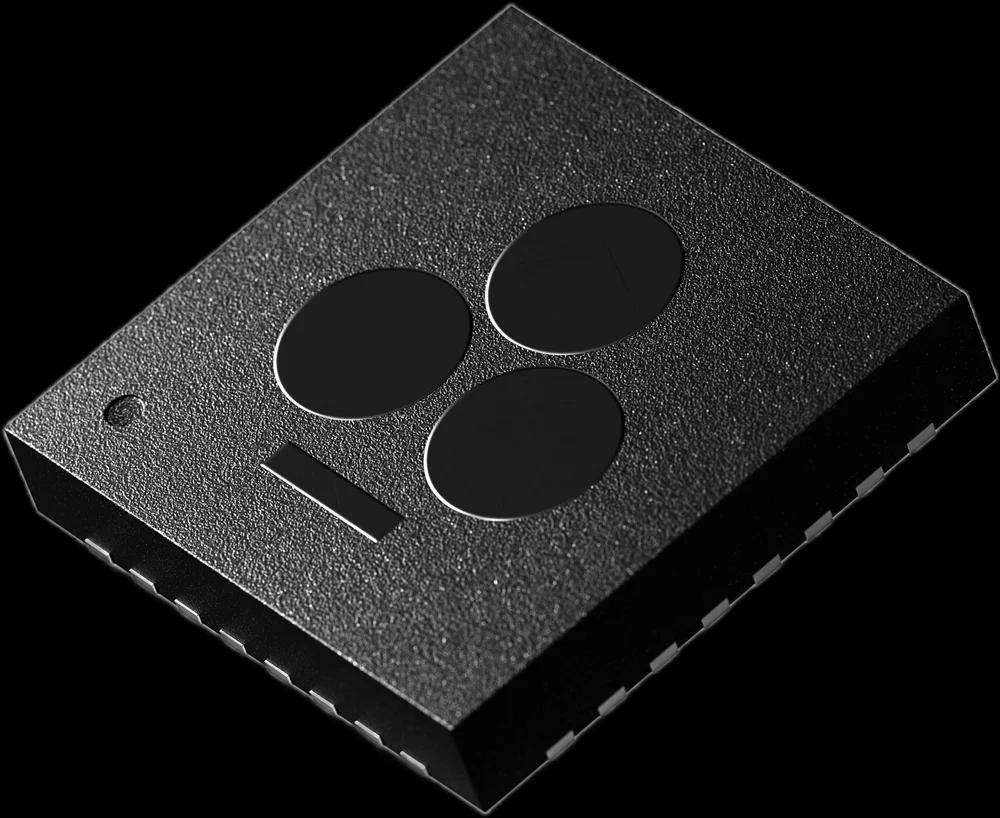
The Ruby N1 photonic entropy chip: a black package with three optical windows
Form
Monolithic photonic chip
Supply
US and European photonic foundry
Rate
Up to 1 Gbit/s
Environment
Space qualification evidence supporting GEO conditions

The engine behind Garnet Plus A41 and Nellite Plus A41.

  1. Phase diffusion

    Spontaneous emission nudges the optical phase of the laser field at random, so the phase performs a random walk instead of advancing predictably — a process with a physical model that can be written down and measured against.

  2. Gain switching

    The drive current is swung from below the lasing threshold to well above it each cycle. Below threshold the field decays away, so no phase memory of the previous pulse survives and diffusion is at its fastest; above threshold, stimulated emission amplifies the seed into a bright pulse without disturbing its phase.

  3. Interference

    Absolute optical phase cannot be measured, so the field is beaten against a second one. The phase difference becomes an intensity — a quantity that can be read at speed.

  4. Detection and thresholding

    The amplitude is photodetected and thresholded into bits by Quside mixed-signal electronics.
Ruby S1

Polarisation switching

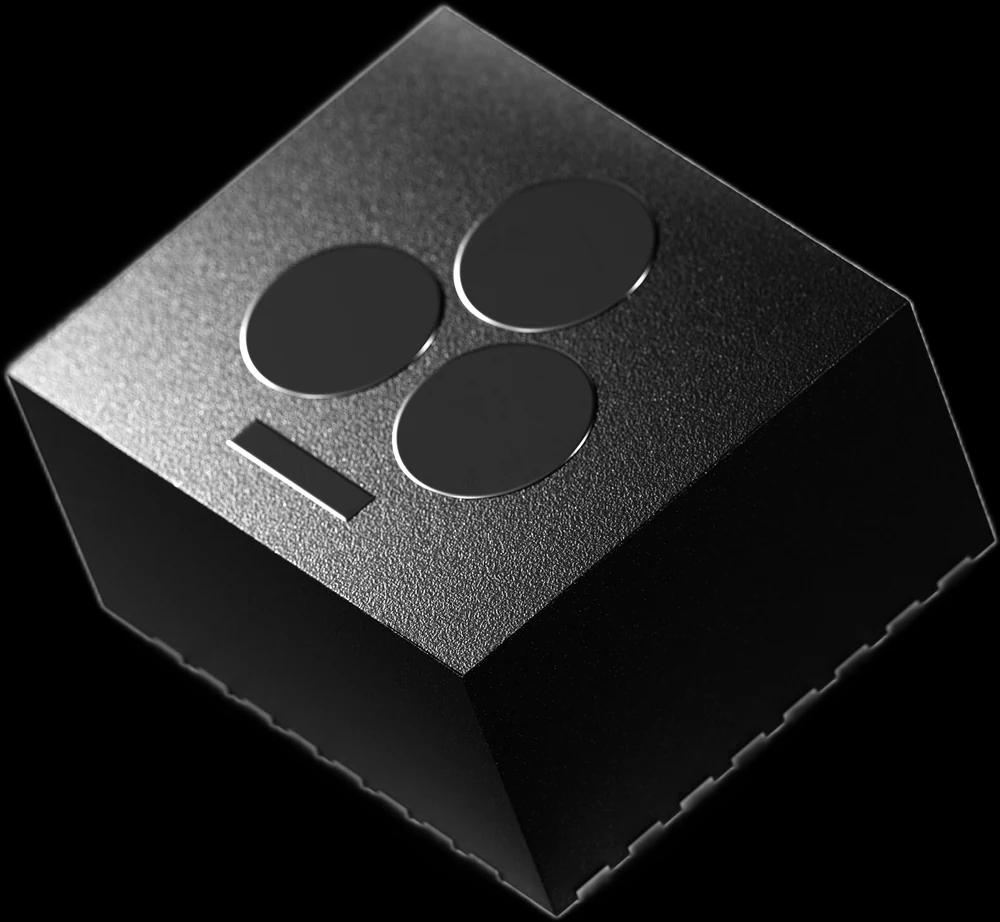
The Ruby S1 photonic entropy chip, the compact engine inside the Onyx module
Form
Compact photonic source
Supply
Coherent VCSELs and material
Optimised for
Volume and cost
Rate
50–100 Mbit/s in the Onyx S1 module

The engine behind Onyx S1.

  1. Polarisation switching

    A vertical-cavity surface-emitting laser — the same device class used for face recognition and proximity sensing in phones — switches its output at random between two polarisation states.

  2. Polarising filter

    A polariser between the laser and the photodetector lets one of those states through and blocks the other.

  3. Detection

    The detector sees a random sequence of light-or-no-light events, and that is the raw randomness.

  4. Volume supply chain

    Coherent supplies the VCSELs and the material, which is what puts a consumer-scale cost and power point within reach of a security component.

The reason for quantum

A model is what makes a source measurable.

A quantum-optical process of this kind has a physical model that can be written down: which parameters govern it, how they relate to the entropy it produces, and what range they occupy when the device is healthy.

That model is what a device can be measured against. Without one, an entropy source can only be assessed by looking at its output — and output is where the information you need has already been destroyed.

With a model, the device tracks the parameters describing its own behaviour and reports when it leaves the range it was validated in.

A single Ruby die held in tweezers above the tray it was picked from

Why output statistics alone cannot establish unpredictability

  • A well-seeded deterministic generator passes the same statistical batteries a healthy physical source passes. Output tests therefore cannot distinguish the two.
  • Statistical tests are necessary and useful as health checks — they catch gross failures fast. They are not sufficient as an unpredictability argument.
  • Unpredictability is a claim about the process, not about the sample. Establishing it requires a model of the process plus measurement of the device against that model.
  • This is why SP 800-90B asks for a documented model of how the source produces randomness, and not merely for a passing test report.
Conditioning

From raw digitisation to deliverable entropy.

Between the photodetector and anything a cryptographic consumer should use, there is a processing chain, and it has limits worth knowing.

Why raw output is not the deliverable

A physical source produces a signal with structure in it: bias from a threshold that is not perfectly centred, correlation between adjacent samples, drift with temperature and supply. None of that means the underlying process is predictable. It means the raw digitisation is not yet in a form a cryptographic consumer should take at face value.

What conditioning does, and what it must not hide

Conditioning compresses the raw stream so that the delivered output carries entropy at close to full rate. It cannot create entropy — the input rate bounds the output. That is why conditioning sits downstream of measurement rather than in place of it: a conditioner will produce a uniform-looking stream from a degraded source, which is the failure mode the health layer exists to catch.

Where the standard draws the line

SP 800-90B treats digitisation, conditioning and health testing as parts of the entropy source, and validates them together. It does not cover the deterministic mechanism above, or the system built on top. SP 800-90C, final in September 2025, describes how a validated source and an approved mechanism combine into a complete random bit generator.

Health monitoring

Measured while it runs.

This is the layer Quside describes as LOVE — Locally Verified Entropy. Local, because the source sits inside your trust boundary. Verified, because the device measures the physical process against a defined model and reports whether it remains inside its validated operating conditions.

  1. 01
    Physical process

    A quantum-optical process with a known physical model generates the raw signal.

  2. 02
    Measurement

    On-device metrology samples the parameters that describe how that process is behaving.

  3. 03
    Entropy estimate

    Entropy is quantified against the model, not inferred from output statistics alone.

  4. 04
    Health state

    The device reports whether it remains inside its validated operating conditions.

  5. 05
    Audit output

    That health record is available to the host, so operations and compliance can inspect it.

Measured against a model

Because the physical process is modelled, the device knows which parameters describe a healthy source and what range they should occupy. Health is a comparison against that model, so the result is specific.

Reported while the device runs

The health state is produced continuously and surfaced to the host, rather than established once at procurement and assumed for the life of the device. Temperature, supply voltage and ageing all move a physical source.

What this establishes

Continuous visibility into entropy-source health: quantified entropy within a defined physical model, reported as the device runs, alongside key management, protocol design and implementation quality.

Independent evidence

What has been validated, and by whom.

Each certificate below is listed with the products it covers and the layer it applies to, so you can check it against your own qualification plan.

NIST SP 800-90B — entropy certificate E178
Scope: Quside PCIe One and FMC One. It validates the entropy source, not a complete random bit generator and not the systems built on top of it.
ENS Alta (Spain)
Quside PCIe One and FMC One, qualified for systems categorised up to Alta — the highest of the three ENS categories.
Space qualification evidence
Qualification evidence for Ruby N1 supporting operation in GEO conditions. Ask for it under NDA and we will walk a payload team through it.

Put a card in your own system.

Tell us the host interface, the throughput you need and the environment it runs in. We will send the right evaluation kit and the drivers or IP cores that go with it.