
The same entropy source in every SKU of the family.
Adopting an entropy source is a product-family decision. Qualify a standard module first, keep the drivers and the evidence you build around it, then move to the compact embedded part when the design is settled and the volume is real.
Who usually specifies it
- Product leaders
- Platform architects
- Semiconductor companies
- FPGA vendors
- Photonics partners
What is driving it
Your customers are starting to ask where entropy is generated and who can observe its verification. You are the layer that has to answer that in hardware, once, for every SKU that carries it.
What actually stalls the decision.
Most product teams accept the entropy argument quickly. What stalls the decision is everything around it: qualification schedule, software ownership, board area, BOM cost and the question of whether this can be carried across every SKU rather than one.
The cost is a family cost, not a unit cost
A new function has to be justified across every SKU that will carry it, over several product generations. A part that only fits the flagship gets treated as an exception and stalls there.
Qualification is paid for in schedule
Environmental testing, security evaluation and customer acceptance all take time that competes with the launch date. Any component that forces qualification to restart from scratch is competing against doing nothing.
Software is the burden nobody budgets
Drivers, firmware integration, test hooks, provisioning tooling and long-term maintenance follow the component for the life of the product. That cost is usually discovered after the technical evaluation is already positive.
Board area and BOM cost are fixed early
By the time entropy is discussed, the enclosure, the power budget and the target cost usually already exist. A function that only fits at a full-height card is out of scope for most of the family.
The requirement is arriving from customers, not vendors
Banks, telcos, government buyers and programme offices are beginning to ask where entropy is generated and who can observe its verification. The OEM is where that question has to be answered in hardware.
From a card on the bench to a module on your board.
Both modules share a photonic engine, a software stack and an assurance model, so the evaluation you run on the card still counts when the design moves to the embedded part.
- Stage 01
Standard module
Available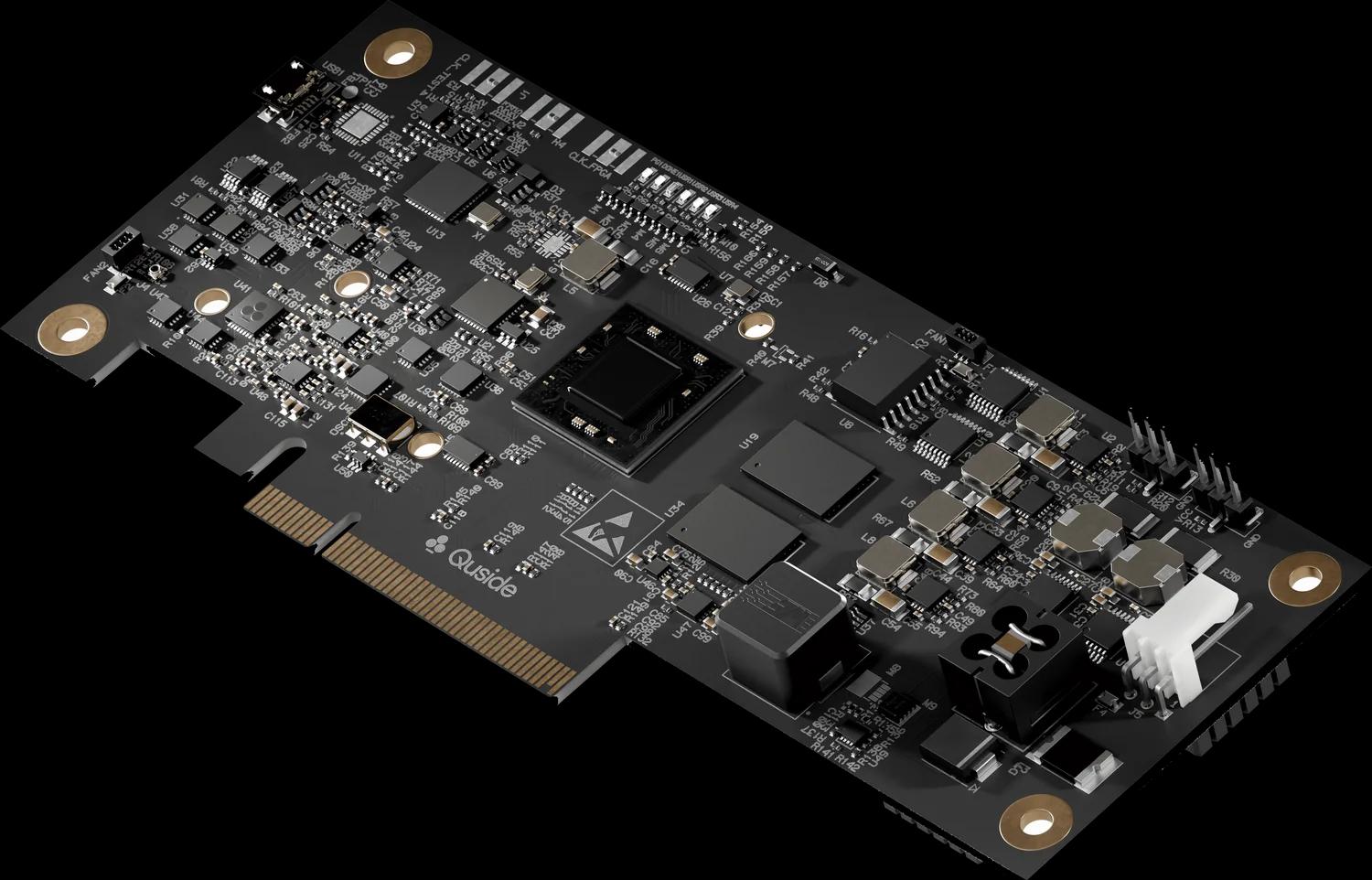
Evaluate and qualify a catalogue part — Garnet PCIe, Nellite FMC or Onyx embedded — in the product you are shipping now. This is where the physical model, the health-test behaviour, the driver stack and the assurance documentation enter your engineering record.
What carries forwardEstablishes the evidence base and the software integration.
- Stage 02
Embedded module
Available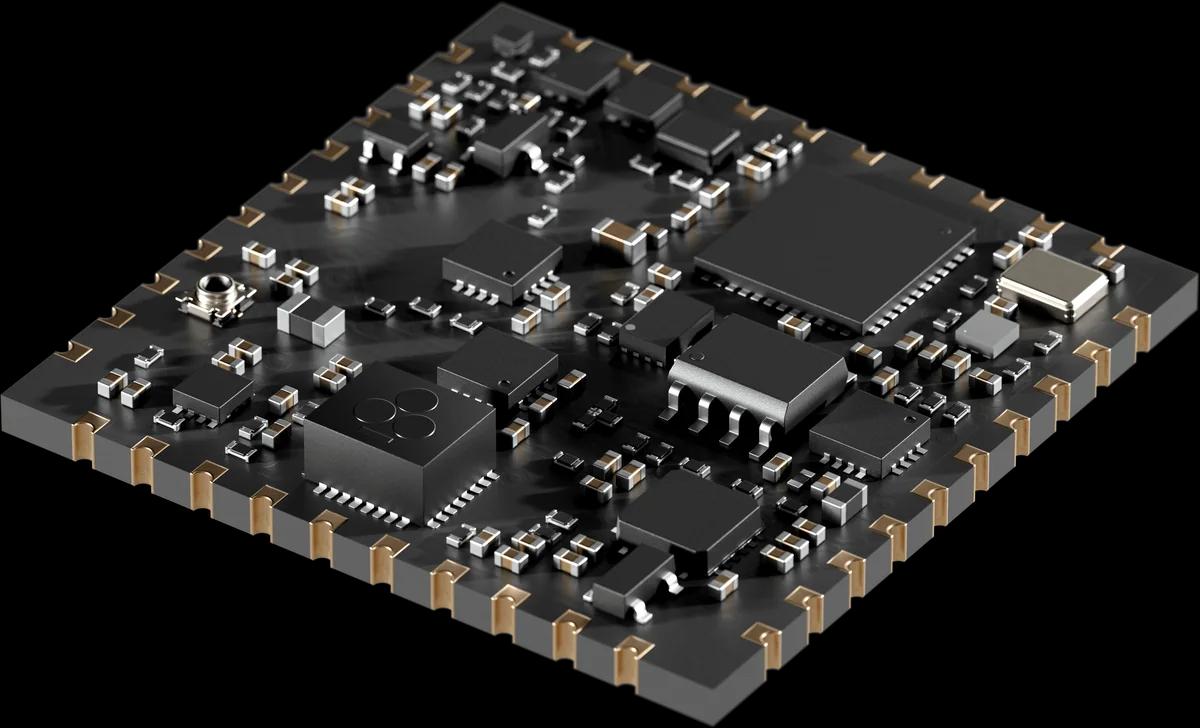
Move to the compact module once the design is settled and volume is real. Onyx S1 is built on Ruby S1, the same assurance model at lower size, power and cost, so the platform decision is preserved while the BOM improves.
What carries forwardReuses the software integration and the assurance argument.
What carries to the next product, and what does not.
The expensive intellectual work carries across form factors: the physical model, the test methodology, the documentation structure. Certificate scope is the exception — it belongs to the product it was issued for, so a different product needs its own evaluation.
The model, the method and the software
- The physical model of the source, which is what makes measurement against a defined model possible at all.
- The entropy estimation and health-test methodology, and the reasoning behind it.
- The documentation package an evaluator asks for: design description, entropy justification, test approach.
- The software integration — Linux C and Python drivers for Garnet, VHDL IP cores for Nellite — and the engineering familiarity your team builds with it.
- Your own internal qualification artefacts: test plans, acceptance criteria and the results of your environmental campaigns.
Certificate scope, and system-level claims
- Certificate scope. NIST SP 800-90B entropy certificate E178 is scoped to Quside PCIe One and FMC One. A different product, a different form factor or your own board is a different scope.
- The ENS Alta qualification, which applies to Quside PCIe One and FMC One at version 1.0 and not automatically to anything built around them.
- Your system-level claims. A validated entropy source is a component of a random bit generator, not a complete one. SP 800-90C describes how a validated source combines with an approved deterministic mechanism.
The practical consequence for a plan: budget for a scoped evaluation against your own product, not for characterising a physical source from first principles. The physics, the estimation methodology and the evidence structure already exist and are the part that takes years to build.

Where the part comes from.
A component decision that has to hold for a decade is a supply question as much as a technical one. Ask us about origin, continuity and second-source planning early — the people who answer are the people who build the part.
Ruby™ N1 is a monolithic photonic chip, with US and European photonic foundry supply chosen for resilience. Ruby™ S1 takes a different route to the same assurance model: polarisation switching from a VCSEL, the device class used for face recognition and proximity sensing in phones, with Coherent supplying the VCSELs and the material. That supply chain is what puts the compact Onyx™ line at a much lower cost and power point than a card in a slot.
Behind both: a fabless company in Barcelona that designs its own photonic and electronic chips, outsources fabrication, runs production and final test in-house and ships fully tested cards. Around sixty people, a majority of them engineers, more than ninety patents, and research running since 2012.
How an OEM engagement starts.
Each one begins on a standard module and diverges when volume, form factor or unit cost takes over.
Product manufacturers
A product family spans several form factors and price points. The security function has to be adoptable in all of them or it fragments the platform and the software stack behind it.
One photonic engine appears as a PCIe card, an FMC module and a compact embedded module, so a single technical decision can be applied across the family and revisited only when the volume changes.
Garnet™ · Nellite™ · Onyx™
HSM and security vendors
The entropy source is a named element of the security architecture and will be examined by evaluators, auditors and customers. It has to be defensible in writing, not just adequate in the lab.
A source with a documented physical model, an SP 800-90B validated implementation at a stated scope, runtime health reporting and a clear statement of what each certificate does and does not cover.
Garnet™ Plus A41 · Onyx™ S1
FPGA and SoC integration
Where the cryptography executes in programmable logic or in a custom SoC, an entropy source that only presents itself over a host bus is in the wrong place in the system.
FMC modules with VHDL IP cores take entropy straight into the fabric. Where the design will carry the source on its own board, the conversation moves to the Ruby™ engine itself.
Nellite™ Plus A41 · Onyx™ S1 · Ruby™ chips
Chip-level integration
At high volume, a module per unit stops making sense and the entropy engine belongs on your own board, next to the parts it feeds.
Ruby™ N1 and Ruby™ S1 are in production and integrate at chip level under a silicon discussion. Bring the package, the interface and the volume before the architecture freezes.
Ruby™ N1 · Ruby™ S1
Joint architecture development
Some integrations need work no catalogue part covers: a specific interface, a specific package, a specific assurance target, or a co-designed block inside your platform.
Quside designs its own photonic and electronic chips and runs production and final test in-house, so a variant is an engineering conversation with the people who build the part, not a supply-chain negotiation.
Engagement under an OEM discussion
Automotive, industrial and gaming platforms.
The engineering conversation is the same in all three: cost, size, power, and whether the assurance argument survives at volume.
Automotive and industrial
Vehicles and industrial equipment carry this segment's constraints in a sharper form: a long service life, a fixed BOM, secure provisioning at manufacture, and identity and update paths that have to hold for years after the unit leaves the line. Ruby™ S1 and the Onyx™ line exist because that combination needs a much lower size, power and cost point than a card in a slot.
Tell us which automotive or industrial standard you are held to and what the acceptance criteria are. The engineering team scopes the qualification work against your programme and comes back with what it takes.
Gaming platforms
Gaming is a product-manufacturer conversation: a platform shipping in volume, where randomness is a functional requirement of the product rather than only a security control, and where the buyer is the equipment maker rather than the operator.
Send the scheme requirement you have to satisfy and the board constraints. We come back with the module that fits the platform and what the evidence for it covers.
Where the source sits as the design moves.
How far your design has travelled from an evaluation card towards your own board is what decides which part you are holding.
| Position in the system | What it does | Quside part |
|---|---|---|
| Entropy engine | Ruby™ N1 uses quantum phase diffusion on a monolithic photonic chip, at up to 1 Gbit/s. Ruby™ S1 uses polarisation switching from a VCSEL — the device class used for face recognition and proximity sensing in phones — and is optimised for volume and cost. | Ruby™ N1 · Ruby™ S1 |
| Runtime measurement | Measurement of the physical process against its model, an entropy estimate, a health state and an audit output — the same loop in every product, which is why the assurance argument survives a change of form factor. | Built into every Quside entropy product |
| Evaluation form factor | Where most integrations start: a standard card in a standard slot, so the software and the assurance work can begin before the board design is committed. | Garnet™ Plus A41 · Nellite™ Plus A41 |
| Production form factor | The compact module that goes into your own board once the design is settled and board area, power and unit cost decide. | Onyx™ S1, built on Ruby™ S1 |
What you can put in your own evidence pack.
You inherit the job of explaining these claims to your own customers and evaluators, so the boundaries matter as much as the claims.
NIST SP 800-90B
- Scope
- Quside PCIe One and FMC One.
- Establishes
- The entropy source has been validated against the SP 800-90B requirements for entropy sources.
- What it does not cover
- It covers the entropy source, not a complete random bit generator, and not the systems built on top of it. SP 800-90C, final in September 2025, describes how a validated source combines with an approved deterministic mechanism.
ENS
- Scope
- Quside PCIe One and FMC One, version 1.0, under the Spanish national security framework.
- Establishes
- Qualification for use in Spanish public-sector systems categorised up to Alta, the highest of the three ENS categories.
- What it does not cover
- Covers Quside PCIe One and FMC One at version 1.0. Scope is per product and per version, so confirm the part number your programme is specifying against the catalogue record.
Space qualification evidence
- Scope
- Qualification evidence supporting operation in GEO conditions.
- Establishes
- Environmental evidence for the entropy engine in that condition set.
- What it does not cover
- Evidence is programme-specific. Confirm the applicable scope with the programme team before citing it in a bid.
Shipped with Garnet™ Plus A41.
Included with Nellite™ Plus A41.
Where to start, and when to move.
Almost every OEM engagement starts on a card and ends somewhere smaller. The question is which part belongs at your current stage.
| Product | Choose it when | Integration | Entropy rate | Status |
|---|---|---|---|---|
| Garnet™ Plus A41 | You are starting: a standard slot, real drivers and the fastest route to an internal evaluation and a software integration your team can keep. | PCIe Gen2 ×4 · Linux C and Python drivers | Up to 1 Gbit/s | Available |
| Nellite™ Plus A41 | Your platform is FPGA-centric and the fabric integration is the part you need to prove before committing to a board. | FMC LPC/HPC and FMC+ · VHDL IP cores | Up to 1 Gbit/s | Available |
| Onyx™ S1 | The design is settled and volume is real: board area, power and BOM cost now decide, and 50–100 Mbit/s covers the requirement. | Embedded module · built on Ruby™ S1 | 50–100 Mbit/s | Available |
| Ruby™ chips | You are planning a generation where the entropy engine belongs on your own board, and you want that conversation to start before the architecture freezes. | Chip-level integration under a silicon discussion | N1 up to 1 Gbit/s | N1 and S1 in production |
What you can verify today.
Certificates, their scope and the production model are stated above and can be examined.
Reference calls under NDA, and a unit on your bench
OEM references are given as calls under NDA rather than published, where a customer has agreed to take one. First Onyx units have shipped to defence customers. Ask and you get an evaluation unit, the assurance documentation your evaluators will want, and a technical session on your form factor, volume and qualification target.
Other systems we build for
Bring the product family, not the unit.
Form factors, volumes across the family, the qualification standard you are held to and where the cryptography executes. That is enough for a first architecture review, a recommendation on where to start, and a clear answer on what your evaluation work carries forward.