
Take the cryptographic work off the host.
A Quside module does more than hand your host random bits. Post-quantum operations, root-of-trust functions and DRBG seeding all execute on the part itself, next to the quantum source that feeds them and inside the boundary you already control.
The work the module takes on.
Each one executes on the hardware, inside your trust boundary.
Post-quantum operations
ML-KEM and the standardised signature schemes are expensive in software, and a migrated system runs them constantly. On a Quside module they execute in hardware, next to the source that seeds them.
Root-of-trust functions
Secure boot, device identity and platform attestation, anchored in hardware. Onyx X5 puts a Lattice MachXO5-NX root of trust and the Ruby S1 source in one module.
DRBG seeding and reseeding
Your deterministic mechanism draws from the source on the same part. Garnet Plus A41 reaches up to 1 Gbit/s over PCIe Gen2 ×4, which is enough headroom to reseed aggressively.
Entropy generation and verification
Digitisation, conditioning, health testing and metrology all run on the module. Everything above draws from a source that reports whether it is inside its validated operating conditions.
SP 800-90C, final in September 2025, describes how a validated entropy source and an approved deterministic mechanism combine into a complete random bit generator. Entropy certificate E178 covers the source half of that construction, for Quside PCIe One and FMC One.
Why it belongs on the same part.
A cryptographic function is only as unpredictable as what seeds it. Two things follow.
Inside your trust boundary
The module sits in your appliance. The cryptography and the randomness underneath it happen in a place you already control, with no network entropy service and no shared pool outside the box. Entropy that arrives over a link cannot be verified where it is used.
Compare the form factors →The function and its entropy together
A root of trust is only as unpredictable as what seeds it, and the usual arrangement puts the two on opposite sides of a bus. Onyx X5 pairs Ruby S1 with a Lattice MachXO5-NX root of trust in one compact module: one part to qualify, and no seam between where key material comes from and where it is used.
See the Onyx modules →Where a design needs more than the module carries — a full PKI, a certificate lifecycle, an algorithm implementation you already license — PQShield and Keyfactor work in the layers above it. See how you buy the whole thing.
For the cost of the alternative, counted rather than argued, the integration ledger puts separate parts and one card side by side.
Why this work is arriving now.
The algorithm standards are final, and so is the standard connecting a validated source to an approved mechanism. Systems are being opened to act on both at once.
NIST standardised ML-KEM together with two signature schemes. All three consume randomness for key generation, encapsulation and nonces, and a migrated system runs them continuously.
Deterministic mechanisms, entropy sources, and the constructions that connect the two. 90C makes the dependency between a validated source and an approved mechanism explicit.
Quantum entropy strengthens classical and post-quantum cryptographic systems. PQC algorithms and entropy assurance solve different parts of the same architecture: one addresses the algorithm, the other the unpredictability it consumes.
Where the work actually runs.
Pick by where the hardware has to sit — a low-profile card in a server, or a module inside your own board. In both, the cryptographic work runs next to the source that seeds it, and that source reports its own health while it runs.
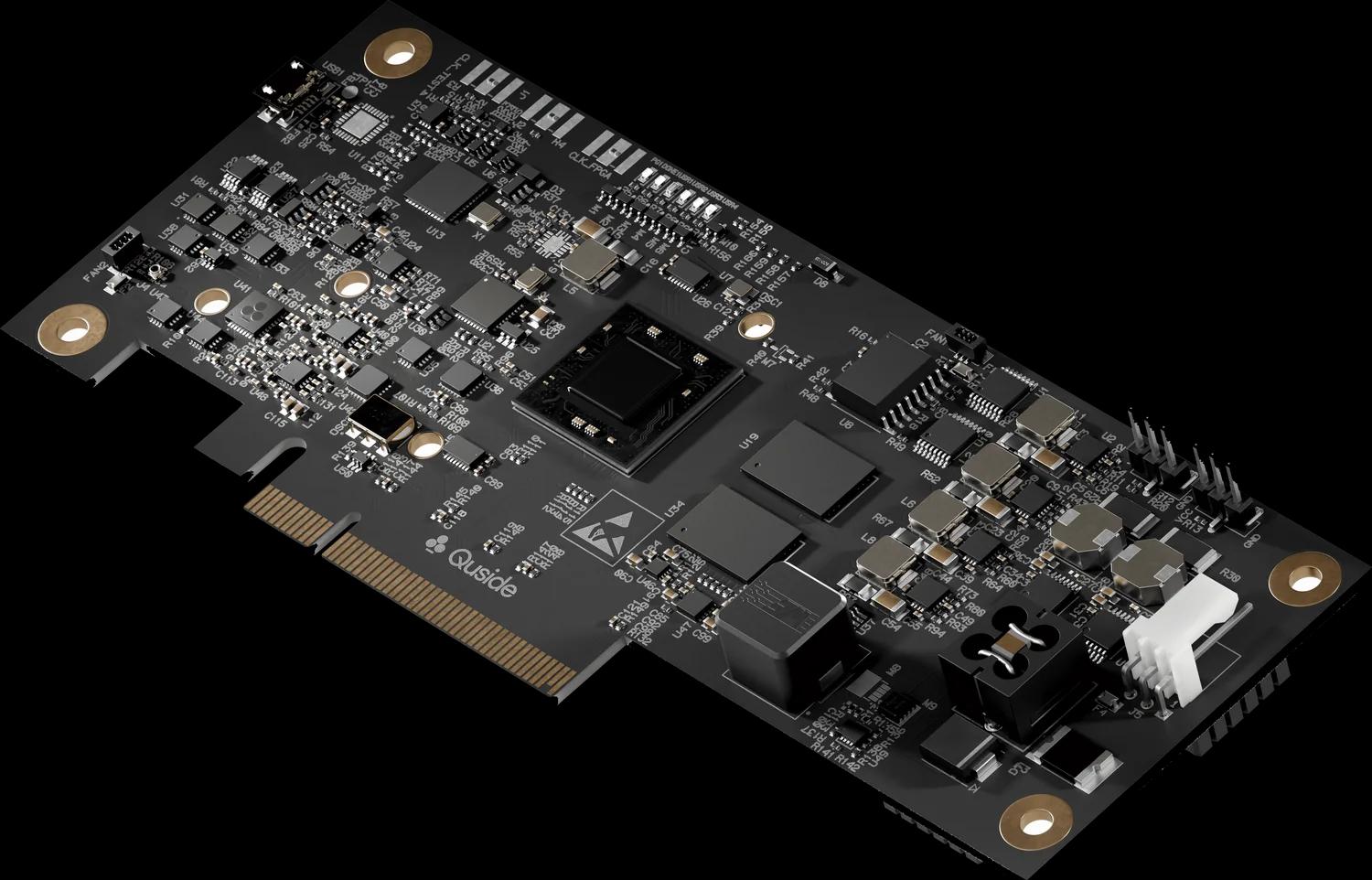
Garnet™ X5
PCIe Gen2 ×4, low-profile. The acceleration card — post-quantum operations and DRBG seeding execute on the board itself, next to the quantum source that feeds them.
View the product →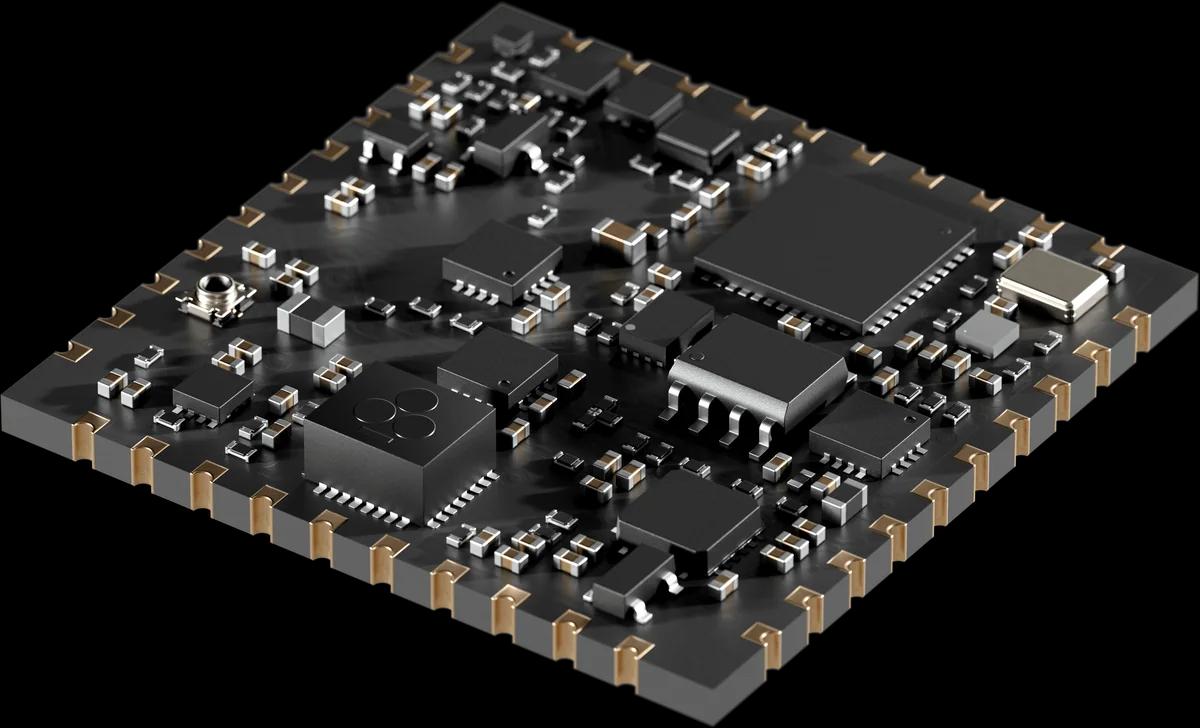
Onyx™ X5
A compact embedded module built on Ruby S1, with a Lattice MachXO5-NX root of trust in the same part. Secure boot, device identity and platform attestation sit next to the source that seeds them.
View the product →Migrating to post-quantum algorithms?
That migration is the one moment the board is open. Tell us the slot, the algorithm set and the qualification regime, and an engineer will walk through which operations can move onto the module, what stays with your host, and what evidence you get with it.
Building cryptographic software?
Your algorithms are only as unpredictable as what seeds them. A module that reports its own health gives your customers an assurance argument they can check, and Quside sells into the accounts that ask for exactly that. If your layer belongs above ours, come and talk.