
Nobody runs a mint
in an open plan office.
Where cryptography physically runs decides who else can watch it happen. The answer is a sealed room. The interesting part is making that room small enough to put one in every device you ship.
Same operations, very different floors.
Stage 02 put the machines next to the material. This one asks what the room around them is made of, and who else is standing in it. Walk the three layouts.
A complete plant, in a few square millimetres.
A secure room is only useful if the whole production process fits inside it. Put half the process in and the boundary has moved somewhere less convenient rather than gone away. Four functions have to be in there together.
- Function 01
Entropy source
The raw material is made inside the boundary, so it never crosses anything on its way to being used.
- Function 02
Runtime verification
Locally Verified Entropy inside the same boundary. Inspection at the point of production, where inspection belongs.
- Function 03
Root of trust and key storage
Device identity, secure boot and the keys themselves, held where the rest of the system cannot reach in.
- Function 04
Cryptographic execution
The operations run inside the room. Results come out, secrets do not.
Three of those four already sit in one part you can buy today. Onyx™ X5 pairs Ruby™ S1 with a Lattice MachXO5-NX root of trust in one compact embedded module, for systems that need a local source and a broader hardware security function in the same place. The fourth, cryptographic execution, runs on the module in the Garnet™ line.
Once the room is small enough to place rather than to buy, it stops being a product conversation and becomes a design one.
Cryptographic plants cannot be centralised.
Real factories are big and central because moving raw material is cheap relative to building another plant. Cryptography inverts that. Keys are born everywhere — in a firewall, a satellite payload, a base station, a car, a meter, a handset — and the material cannot be shipped safely, so the plant has to come to the material.
One plant, long routes
Randomness generated in one place and sent onward. The device consuming it cannot verify what it received, cannot work when the link is down, and inherits somebody else’s jurisdiction, uptime and audit boundary. Each of those lines is a dependency.
Many plants, no routes
A complete, verified, sealed plant at every point where keys are born. No link to lose, no jurisdiction to inherit, nothing in transit. The trust boundary is the device, which is the only boundary the device can actually enforce.
- Availability
- A local source works when the network does not. For anything that has to keep operating disconnected — a satellite payload, an industrial controller — that is a requirement rather than a preference.
- Verifiability
- You can measure a source that sits inside your device. You cannot measure one that sits inside somebody else’s, and a signed assertion that it was fine is not the same evidence.
- Sovereignty
- When the source is on the board, the questions about jurisdiction, ownership and supply chain have answers a procurement team can put in writing.
- Attack surface
- Randomness that arrives over a link adds a channel, a protocol, credentials and a provider to the threat model. A local source removes all four rather than protecting them.
To be fair to the alternative: shared randomness services are not useless, and there are settings where one is a reasonable engineering choice. The argument here is about trust boundaries. For anything where the device has to stand on its own and prove it, local wins on every axis a high-assurance buyer scores.
Same engine, more than one way to take it.
Putting a sealed plant in every device only works if the plant keeps getting smaller and cheaper, which is a semiconductor question rather than a marketing one. One photonic entropy engine sits behind all of it.
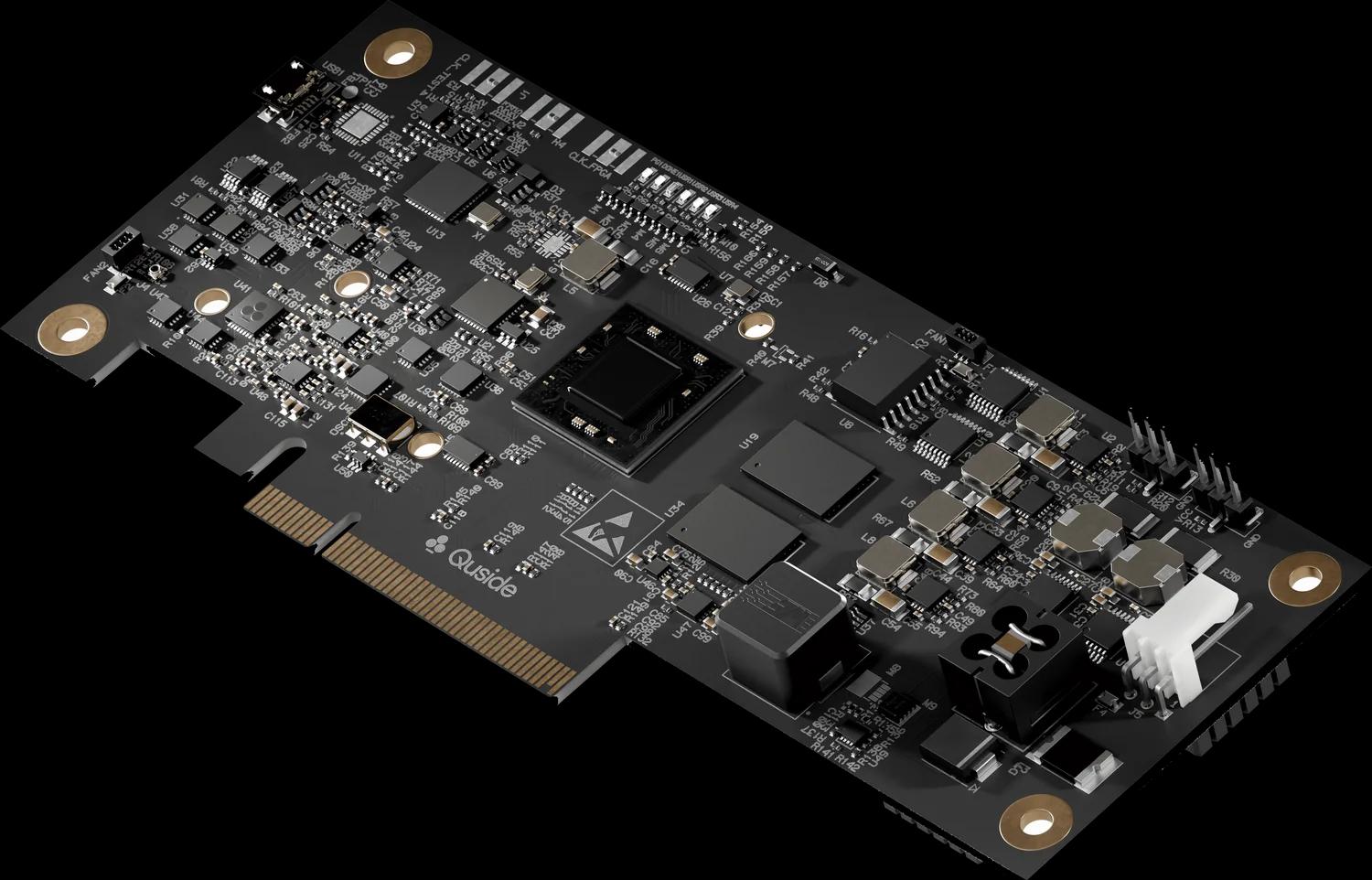 Shipping
Modules
PCIe and FMC cards, plus compact embedded platforms. Standard interfaces, low adoption friction, and the fastest route into a system that already exists.
Compare the modules→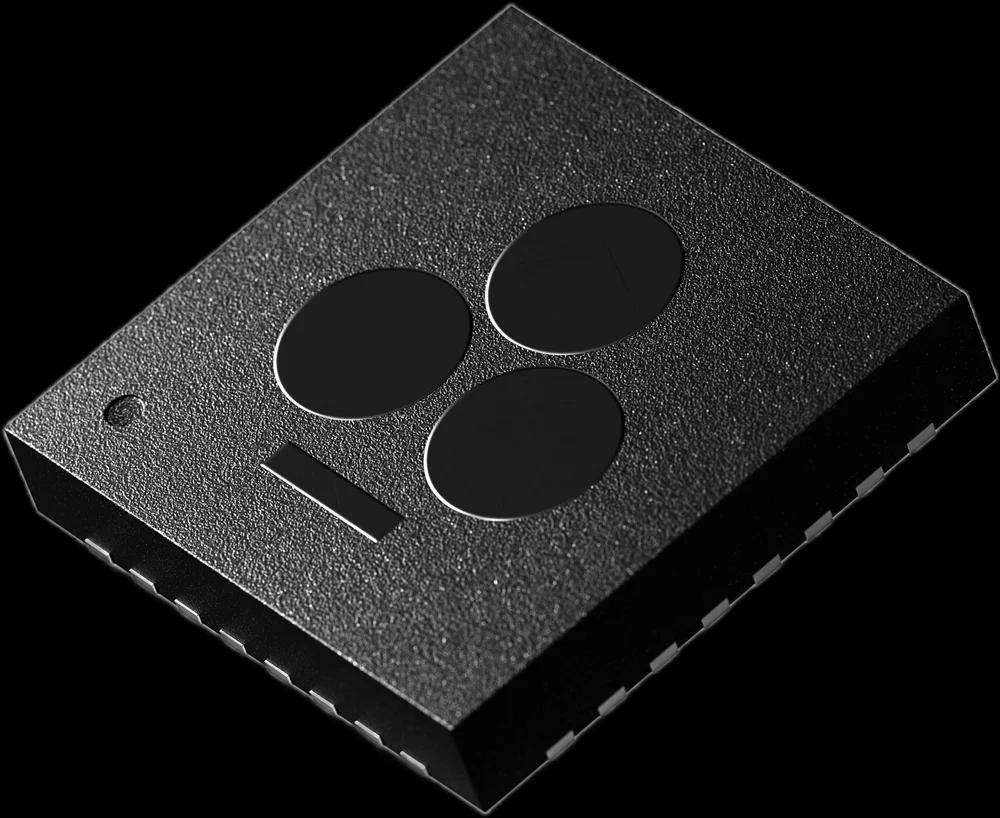 Shipping
Chips and integration
The photonic entropy engines behind every module, available as chips and through licensed semiconductor integration for teams building the source into their own product.
See the engines→
The compact end of this rides a supply chain that already exists: the volume entropy engine uses the same class of laser that runs face recognition and proximity sensing in phones, made in enormous numbers every year for consumer electronics. That is the difference between a lab-grade source and something that can eventually sit in everything.
Can this device stand on its own and prove it, with the network down?
Verified raw material, an efficient line, and a sealed room small enough to sit at every point where a key is born. Not one plant serving the world, but a complete plant everywhere the world needs one.
That is what Quside builds, and it is why every conversation starts back at the raw material.